Cold Spring Christmas

Here is another mini-collection of photos of Hudson Valley towns decked out for the holidays. This time it’s Cold Spring in Putnam County.

IMG_0375 blog

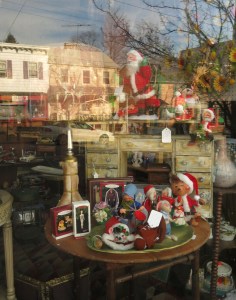
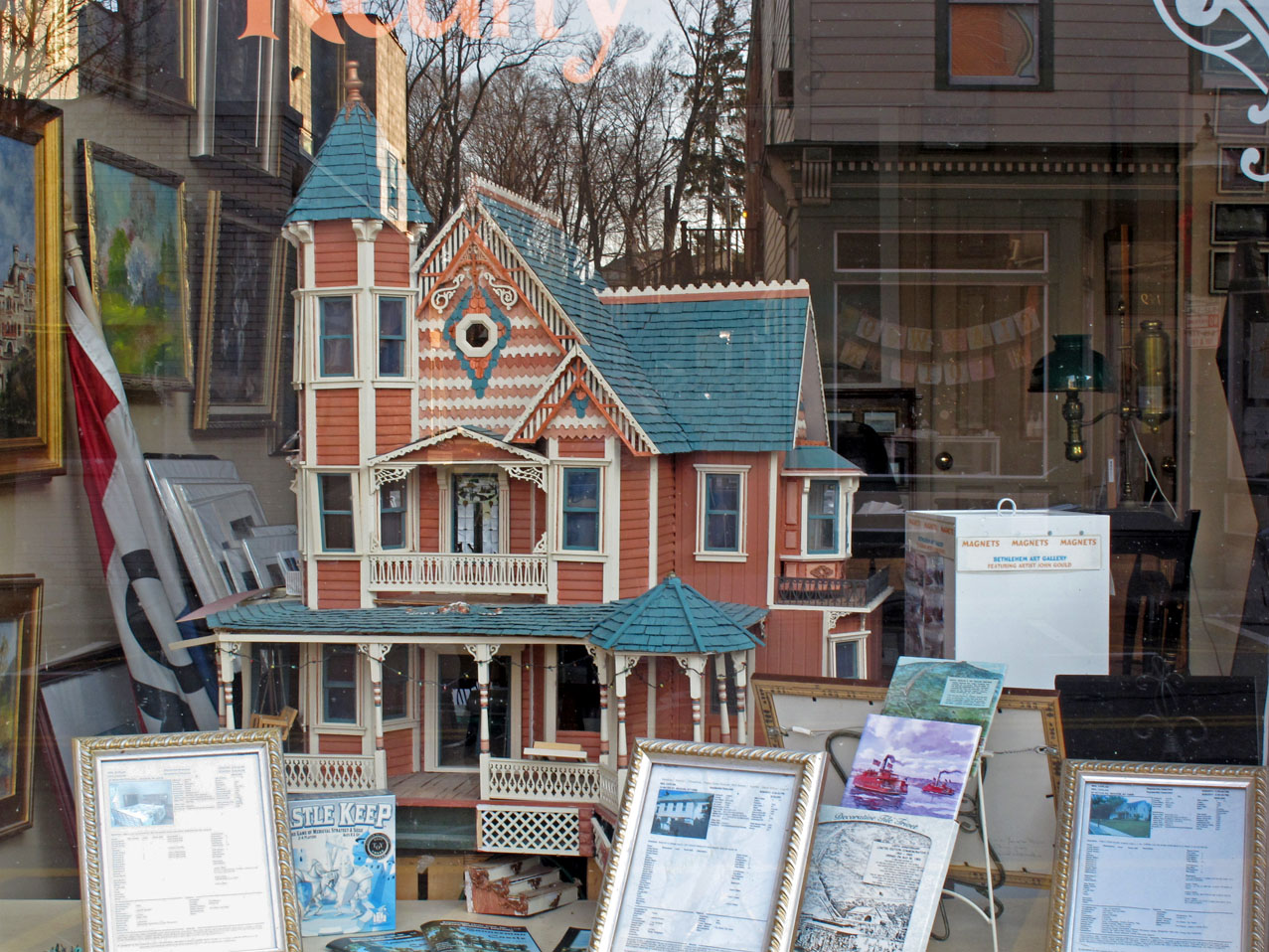
The reflection of the decorated shops across the street in the window of one of Cold Spring’s wonderful antique shops gives a “two-for-the-price-of-one” image.

IMG_0383 ed blog

This cheerful snowman greets passersby outside my favorite Cold Spring cafe.

IMG_0386 ed blog

One of Cold Spring’s premier restaurants boasts not only a river view, as its name indicates, but also a stunning view of Storm King Mountain, as you can see, on the other side of the Hudson.

New Paltz — Decked Out for Christmas

With Christmas just around the corner I thought it would be fun to visit some of my favorite Hudson Valley towns and see how some of the stores are decorated. Here is a sample from New Paltz.

IMG_0371 sThis set of colorful stick figures that always greet visitors at the entrance to the famed Water Street Market is currently sporting Santa Claus caps.

IMG_0372 s

Many of the shop windows in the Water Street Market are decorated with this “gift-wrap” theme. The photo includes a reflection of the shops on the opposite side of the pedestrian path.

IMG_0373 s

My favorite place in all Water Street — the gallery of regional photographer G. Steve Jordan. If you’re in New Paltz, stop in for a real visual treat. Otherwise, visit Steve’s website. Anyone who has been to the Mohonk Mountain House should appreciate one of Steve’s prints of the area as a remembrance of their visit. One of his magnificent 2013 calendars will keep the memories alive on your wall all year long.

Burger Hill Park offers great “prospects”

In 18th-century (and early 19th-century) England the word “prospect” was often used to mean “view,” and people enjoyed going out walking and hiking to find nice prospects. They would ascend high hills to enjoy the prospect; apparently, this is how one accessed the best view–oops, I mean prospect–of the university town of Oxford. Poets often waxed eloquent in praise of prospects (the well-known phrase “Distance lends enchantment” comes from one of these poems).

Those searching for an interesting “prospect” in the Hudson Valley might well consider a trip to Burger Hill Park near Rhinebeck. Burger Hill offers stunning views of the Hudson Valley and Catskills and of the surrounding, bucolic farmland, and is especially attractive during the foliage season, as you’ll see from my photos. I understand that it’s a great place for sledding during the winter, and during the spring and summer birdwatchers have plenty of opportunities for their favorite activity. In fact I noticed several nesting boxes built at various places and wondered what species they attract–possibly meadowlarks?

Burger Hill has an interesting history. In the early 18th century a man named Burkhardt, a Palatine German who settled in this region, became a tenant farmer of Henry Beekman (maybe you’re familiar with the fine Beekman Arms restaurant in Rhinebeck), who acquired the land in 1679. Ownership eventually passed to the original tenant’s descendants, whose name over the years evolved to Burger. The property passed on to a series of different owners until it was sold to Scenic Hudson in 1997. Currently it is managed by the Winnakee Land Trust.

To enjoy the views you need to climb the 550-foot-high hill. There are three ways to do so, two gradual ascents (of which the one to the right is the more scenic) and one direct, unrelentingly steep path, which I don’t recommend unless you are quite certain you’re in the best of shape. You’ll find benches here and there and, at the top, stones into which are carved the shapes and names of the mountains visible on the opposite side of the river to help you identify them.

Burger Hill is reached by driving south from Route 199. The turn-off, which is on the right, isn’t too far after the junction with Route 9G which leads into Rhinebeck. After you’ve scaled the hill and enjoyed the view, you might want to treat yourself to something at one of the nice cafes in town.

These and other photos of the Hudson Valley, Catskills, and my other favorite places can be viewed and purchased on my website.

Olana Educates and Entertains

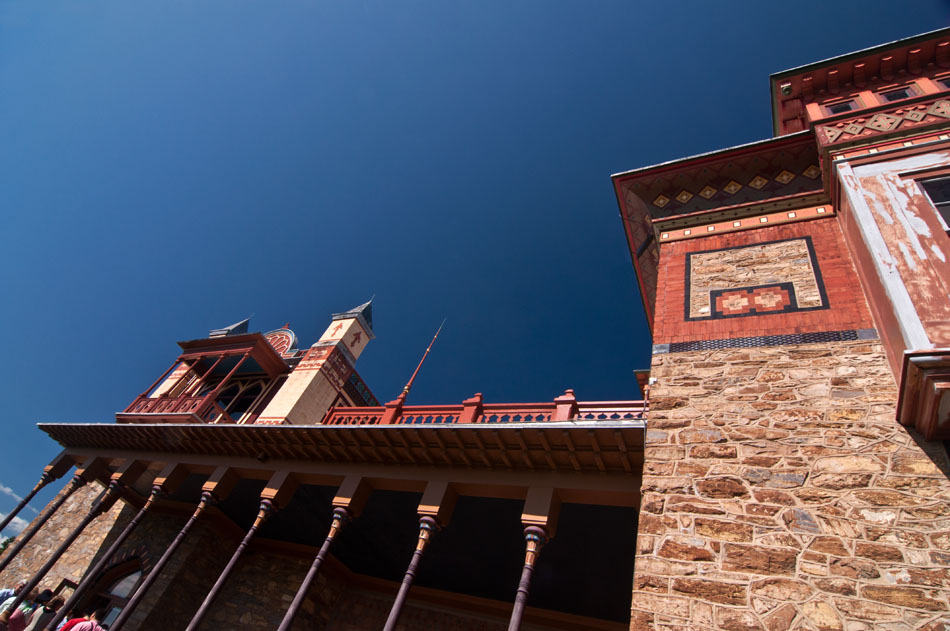
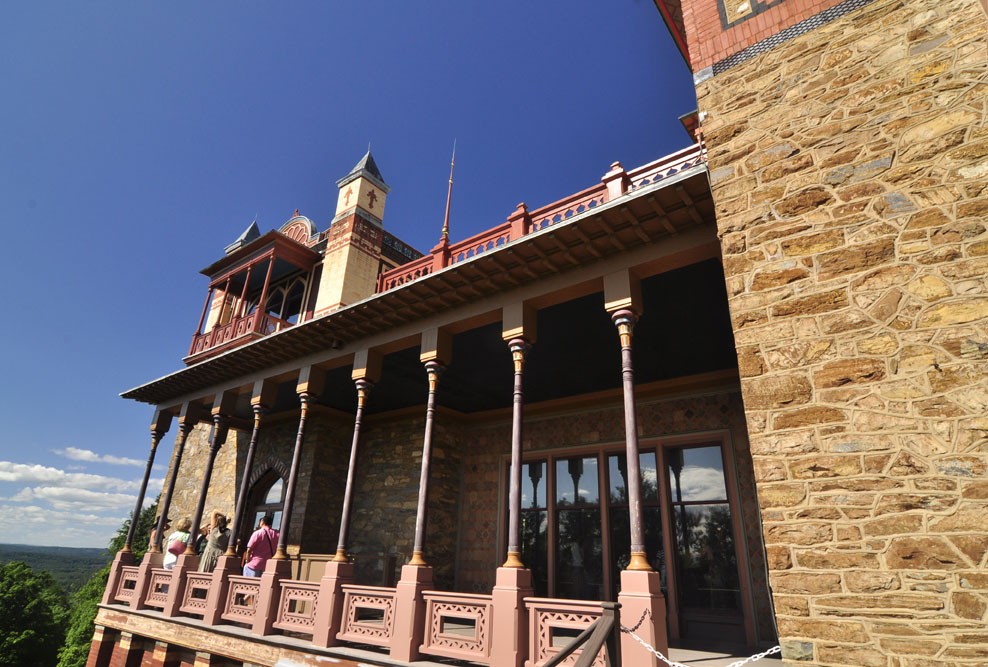
The Olana State Historic Site, the fabulous mansion and estate constructed by 19th-century landscape artist Frederic Edwin Church (1826-1900), is more than well worth the drive up the Thruway, or the Taconic State Parkway, or whatever road you choose to take to get there. Guided tours of the mansion are available. Or you can choose simply to walk the miles of trails that take you through this incredible landscape (bring your lunch; there are plenty of places to stop and enjoy it). Or you may want to take advantage of the amazing variety of events organized at Olana, including the informative lectures given by experts in their various fields.

Dr. David Schuyler chats with audience members after his lecture.

Dr. David P. Schuyler gave one such lecture recently, on the Sanctified Landscape (be sure to check out his book by the same title!). A professor of American Studies at Franklin & Marshall College and a native of Newburgh, New York, Dr. Schuyler spoke compellingly about historical memory and the need for “tangible remains of the past” to keep those memories alive. He certainly brought General George Washington to life in an incomparably vivid fashion, especially the Washington of the final months of the Revolutionary War who lived in the Hasbroucks’ House in Newburgh and traveled down to the Last Encampment of the colonial troops near what is now Vails Gate.

From history to geology–an upcoming event will feature a talk by well-known local geologist Dr. Robert Titus. Olana is easily reached off the Taconic Parkway and from Exit 21 off I-87. Check out Olana’s website where you can also sign up to receive emailed updates–and if you visit before the end of October, absolutely do not miss the stunning photography exhibit by Peter Aaron, Olana’s Dynamic Landscape, in the Coachman’s House.

Tours of the mansion were booked solid on this gorgeous late summer day.

Visitors enjoy the view of the Hudson River and the Catskills from Olana’s great lawn.

Sara J. Griffen, President of the Olana Partnership, greets visitors arriving for Dr. Schuyler’s lecture.

Huguenot Street and Treats from the Tea Room

The DuBois Fort Visitor Center is open for business.

Historic Huguenot Street in New Paltz repays a visit at any time of year. The light is different, the flowers and foliage change–it’s even nice with snow (remember that white stuff?). Right now it’s open for the season. You can go on a guide-led tour of the

A Window onto the Huguenot World

buildings or just pop into the Visitor Center and enjoy the exhibits there. Currently there’s an exhibit titled Through the Lens: A Nineteenth Century Photographic Journey, which of course I found fascinating.

A weekend in mid-July brought some extra treats: the Visitor Center was selling baked goods from the Village Tea Room, with all proceeds benefitting the ongoing fine work at Historic Huguenot Street. So you got to enjoy some tasty muffins and brownies, along with an excellent cup of coffee, and know that your money was helping New Paltz’s jewel attraction.

Curious to learn more about the origin of these baked goodies, I returned the following weekend to visit the Village Tea Room. This Bake Shop and Restaurant offers, of course, the baked goods that you can buy to take out, but it also has indoor and outdoor sit-down service offering quite a varied and interesting menu. As a Swedophile, I made a mental note to return one day with a

The Village Tea Room’s cozy indoor restaurant

friend to order the gravlax open-face sandwich.

The Village Tea Room Bake Shop and Restaurant is located at 10 Plattekill Avenue, just off Route 299 in central New Paltz. They are open every day except Monday. Why not pay a visit the next time you’re in town?

St. Anastasia’s Church in Harriman Celebrates Memorial Day

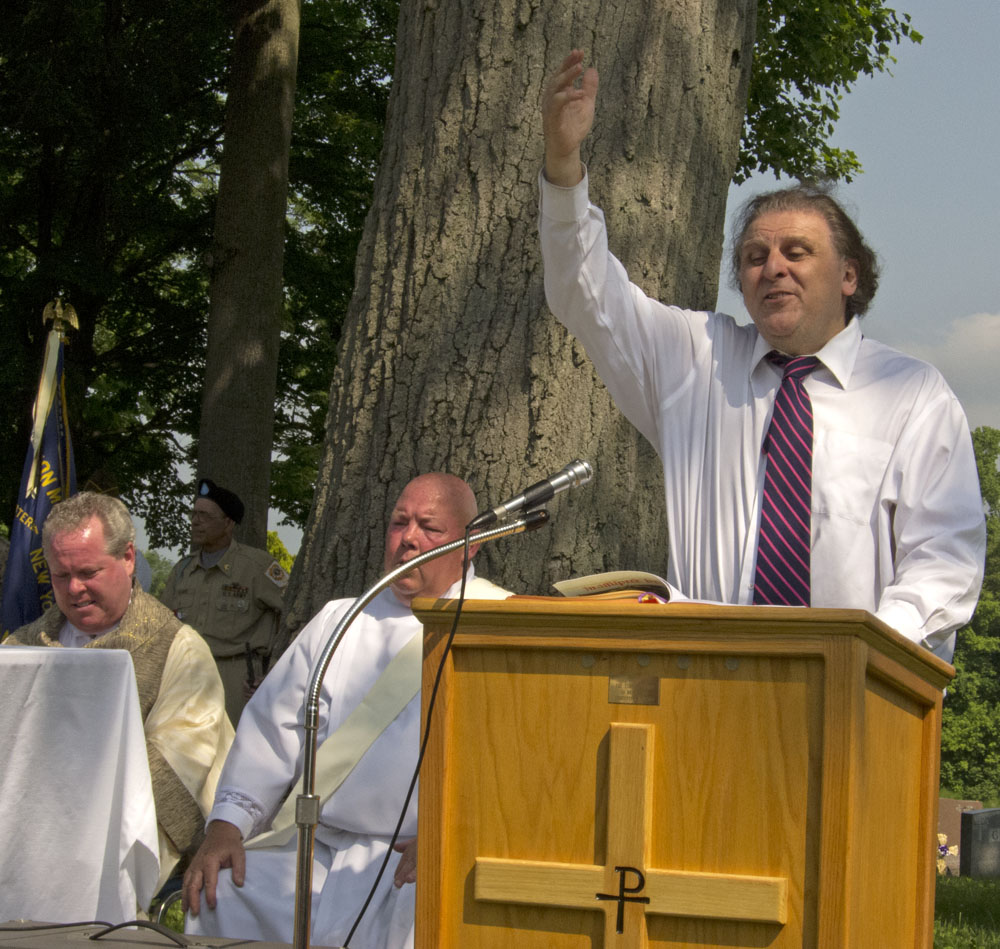
All over the Hudson Valley, Memorial Weekend was filled with parades, religious services, wreathe-layings, and other celebrations honoring the brave soldiers who have served and given their lives in the U.S. Armed Forces. A long-standing tradition in Harriman, Orange County, has been an outdoor Mass on Memorial Day, along with honor guard, the reading of the names of those who have fallen, and the laying of a wreathe at the memorial in Harriman’s village square.

The weather this year, though very hot, allowed for the service to be held outdoors. All the key players were new: it was the first year for St. Anastasia’s pastor Fr. Michael Keane, music director Anthony Daino, and parish secretary Jean Marie Weinberg, whose awesome organizational skills brought everything and everyone together. Here are some photos from the event.

New patriots: The Daino twins wave their flags while Mom looks on.

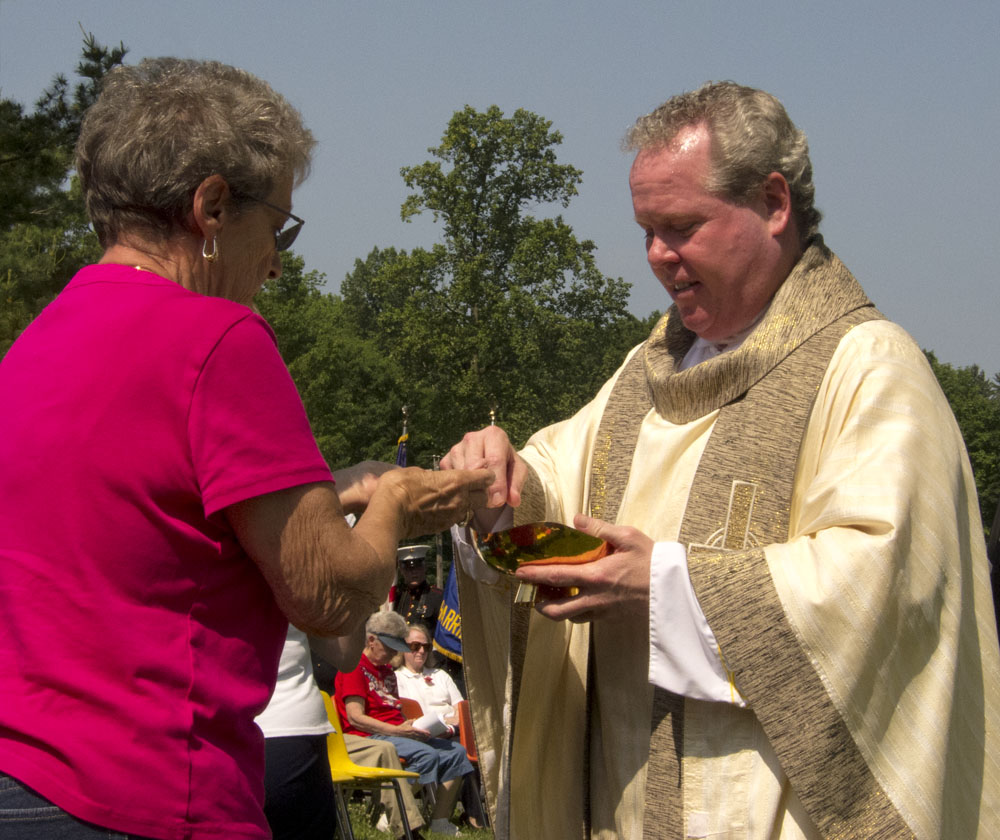
Fr. Michael Keane gives Commuinion to a parishioner.

Fr. Eder Tamara, Fr. Michael Keane, and Deacon Brian O’Neill hold up the gifts.

The Knights of Columbus form a guard of honor.

Music director Anthony Daino leads the singing while Fr. Michael Keane and Deacon Brian O’Neill join in.

The names of the honored war dead from Harriman are read out.

Cold Spring Farmers’ Market Opens in Boscobel

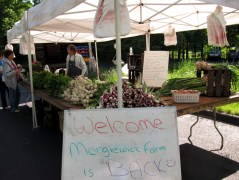
Farm Market 1Locavores in Putnam and Upper Westchester Counties (as well as some of us from across the Hudson River) are flocking to the Cold Spring Farmers’ Market’s new spring/summer outdoor home at the historic Boscobel Restoration. The market made its debut at Boscobel on May 12 after having spent the colder months at the indoor site in Philipstown and after the unavailability of the previous outdoor location made a move necessary.

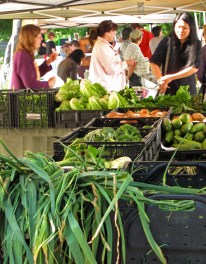
Regular patrons of the Cold Spring Farmers’ Market will find their favorite vendors,Farm Market 2 selling fruit and veggies,cheese, honey and other bee products, bread and a tempting variety of other savory and sweet baked goods, local wines, and much more. Vendors come on a rotation basis, so that you may find that the offerings differ slightly from week to week. (For example, my favorite yogurt concession from Ronnybrook Farms wasn’t there when I visited today.)

Farm Market 3Also on hand is a cheerful volunteer from Boscobel itself, to answer questions for those who have never visited this magnificent site. As an extra gesture of goodwill, Boscobel is offering free entry to its grounds on Saturdays (tours of the mansion will cost the usual fee), so that you can combine your shopping with a walk on the beautifully landscaped grounds or even a hike on the Frances Stevens Reese Woodland Trail. In fact, why not buy some bread and cheese, or a quiche or mini-pizza, or a freshly baked fruit pie at the market, and enjoy them at Boscobel’s picnic area?

The Cold Spring Farmers’ Market is open at Boscobel, just south of Cold Spring on the west side of Route 9D, from 8.30 am to 1.30 pm through November 17. Come and enjoy this beautiful, scenic site and, at the same time, support the local farmers by buying their healthful, fresh and tasty produce.

Farm Market 4Farm Market 5

All Roads in Catskill Lead to Thomas Cole

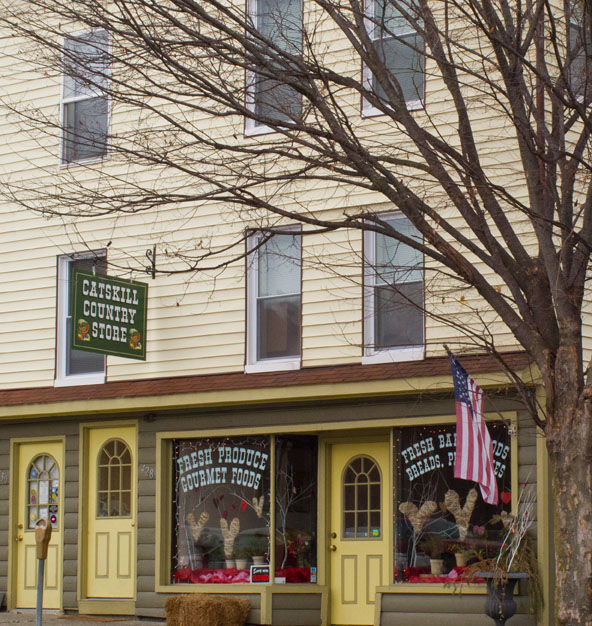
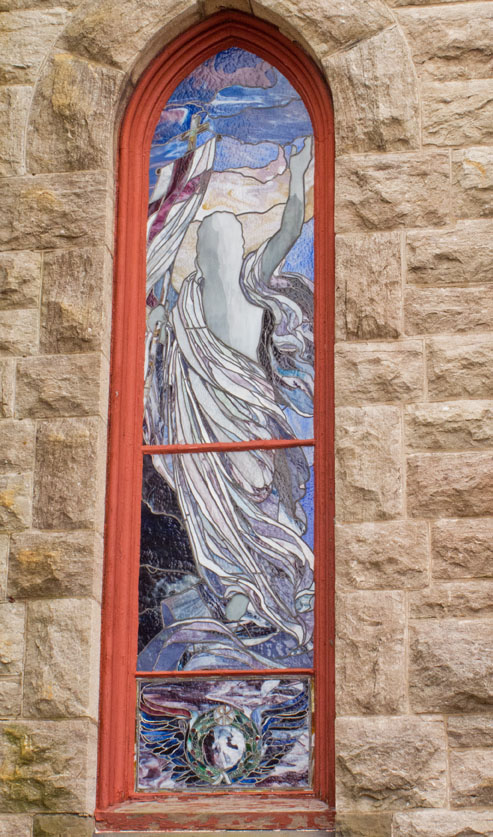
Unless visiting Cedar Grove, the Thomas Cole National Historic Site, my drives to Catskill have usually taken me through the town en route to somewhere else–usually over the Rip van Winkle Bridge to Olana or some other Columbia County destination. Deciding last Sunday to stop and check out Catskill’s Main Street, I discovered a visual treat of colorful old homes and stores, such as the Catskill Country Store pictured here. Topographically, the Main Street of Catskill is interesting in that it is crisscrossed by alleyways that, on one side, lead up a hill to a more residential part of town and, on the other side, take you downhill to what I later discovered, when checking a map, is the waterfront of Catskill Creek. The very raw weather that day was not conducive to undertaking my usual curiosity detours, but I did take one, and a fortuitous one it was, because I then discovered St. Luke’s Episcopal Church, where Thomas Cole was an active parishioner. This photo shows one of the beautiful windows in the church, which stands on a hill overlooking the town and the Catskill Mountains in the distance.

OK, I must confess: The ultimate purpose of this visit to Catskill was Thomas Cole-related. I was headed to a lecture at Cedar Grove. But first I stopped at the local cemetery to visit Cole’s grave, armed with a map given me by Marie Spano on my last visit to Cedar Grove. Cole and his wife, Maria Bartow, and other family members are buried there, all together. On Cole’s grave is engraved “The Lord is my shepherd,” and after his religious conversion he did indeed live by those words from Psalm 23.

The lecture being given last Sunday was the second of the four Sunday Salons for this season. Kevin Sharp, who has an amazing reputation as a gallery museum and director and curator of groundbreaking exhibitions all over the country, spoke about how Cole drew inspiration from such English Romantic poets as Coleridge and Byron for his later work. Like many first-rate artists, Cole sometimes rebelled against the idea of depicting scenes from poetry in order to please clients and instead probed further to uncover and interpret the poem’s deeper meaning. As a photographer I could well relate to the discussion of documentation vs. interpretation and so I was glad to be able to purchase Kevin Sharp’s book Poetic Journey, which includes a relevant article.

The next Sunday Salon at Cedar Grove will be a particularly exciting one. Did you know that Thomas Cole now has an exhibition at the Louvre in Paris? Dr. Katherine Bourguignon, the curator of “New Frontier: Thomas Cole and the Birth of Landscape Painting in America,” will be speaking about the exhibition on Sunday March 11. If you are interested in Thomas Cole, the Hudson River School, or nineteenth-century landscape painting in general, please consider attending this unique event. You can visit the Thomas Cole National Historic Site’s website for further information including directions and to sign up for emails reminding you of future events.

——-

Please visit my website where you can see my gallery of photos of the Hudson Valley and the Catskills. My Print of the Month, which is of a favorite nature site in Rhode Island, is available for purchase at a special price until February 29.

Beacon Bounces Back

Once an important strategic point in the Revolutionary War—both town and mountain got its name from the signals lit atop the mountain to warn the Continental Army of approaching British troops—the city of Beacon now thrives as a center for the arts.

The city’s fortunes haven’t always been so upbeat.  “Urban renewal” caused the demolition of important historic buildings in the 1960s. During the following decade, the closing of many factories due to economic decline precipitated an economic downturn that lasted until the late 1990s.

Enter the artists and their visions.  The arrival of Dia:Beacon, the largest museum of contemporary art in the country, in what had been a Nabisco cracker box factory generated both an artistic and a commercial renaissance in this Dutchess County city. Residents of artistic enclaves downstate began relocating to Beacon. A variety of art galleries followed in Dia:Beacon’s wake, including Fovea, the Van Brunt Gallery, and Hudson Beach Glass. Hudson Beach Glass, founded by well-known glass artist John Gilvey with three partners, is located in a renovated former firehouse, itself a work of art. Just as the city of Hudson, some sixty miles north, arose from the doldrums to refashion itself as a destination for antiques aficionados, so Beacon has been transformed into a mecca for the arts.

Friendly cafés and restaurants cater to visitors and residents alike. Those interested in history and hiking have their choices of historic homesteads and hiking trails, including hikes up Mt. Beacon itself.

On the opposite side of the river in Newburgh, a statue of General Washington looks across and surveys Beacon and its mountain. Could he ever have envisioned the future history of this amazing city?

For my recent photograph uploads to my Hudson Valley Gallery, please visit my website. Thank you!

Boiceville Rises Again

ImageThe entreaty that we read in more than one of the Psalms, “God, save me, pull me free from the raging waters,” could all too easily be applied to several towns and villages along Ulster County’s Route 28. Boiceville is one of those towns. In the early twentieth century, the original site of Boiceville was one of several in the Esopus Valley that were moved or destroyed in order to make room for the Ashokan Reservoir. The valley would be flooded to create a water supply for the burgeoning population of New York City, 120 miles to the south. A meticulously researched film by area resident and professional filmmaker Tobe Carey documents this event in heartbreaking detail.
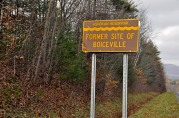
ImageIn a sense, Boiceville was one of the fortunate towns. It was relocated, while several of the others were demolished without a trace. Today when you drive along Route 28, you can see signs indicating the former sites of the Esopus Valley towns that either disappeared or were displaced.

The flooding of the Esopus Valley for the AshokanImage Reservoir was not the last water threat to ravage this Ulster County area. In August 2011 Hurricane Irene devastated towns from Phoenicia to as far west as Margaretville and Prattsville. The recovery still goes on.
Last week I drove out to Boiceville, chiefly in search of the viewpoint from which the nineteenth-century landscape artist Asher B. Durand painted his masterpiece High Point: Shandaken Mountains. We had located it at approximately the point at which Routes 28 and 28A meet, which happens to be where Boiceville begins.

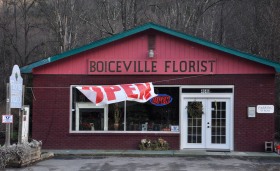
I’m not certain whether I found the exact spot for Durand’s painting, but I did find a Boiceville recently risen from the effects of Irene. Why, I wondered, did the local florist display a sign that so insistently proclaimed that he was open?  Then when I pulled up to the parking lot for the Boiceville IGA Market and other businesses and saw the huge signs thanking the community and the volunteers, the light bulb went off in my head. Wanting to support the local economy, I went into the market, bought some delicious rolls and deli meats, and began chatting with the locals. Sure enough, the supermarket had been closed for eight weeks until the Irene waters that had flooded the store’s basement and main floor could be cleared. And the florist–he had only just reopened after the hurricane had taken its toll. The Rotary Club helped to coordinate massive relief and fundraising efforts, to the extent that $12,000 still remains to be distributed, in 2012, to people who still need it.
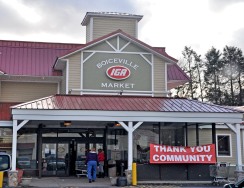
ImageThe need still persists.  And so does the existence of these amazing communities who rally, coordinate, and cooperate in order, with God’s help, to pull themselves from the raging waters.

My collection of Favorite Photos of 2011 is now up on my website in its own gallery, Several of the photos, of course, are from the Hudson Valley. I invite you to visit my website to check them out. If you wish to purchase any prints, I’m offering a 10% discount on all purchase with a minimum order of $10.00.  Just use Coupon Code NYSP12; valid until January 31, 2012.