Antiques Store in Hunter is a Treasure Trove

Ed IMG_2034 s

The Mountain Top region of the Catskills is home to an amazing number of artistic, creative, and literary people. Cindy Smith is one of them. Cindy and her husband, Dan, operate the Antiques store located at the crossroads of Routes 23A and 296 in Hunter (you can’t miss it–it’s just to the west of the junction, on the north side of 23A — at 8176 Main Street).
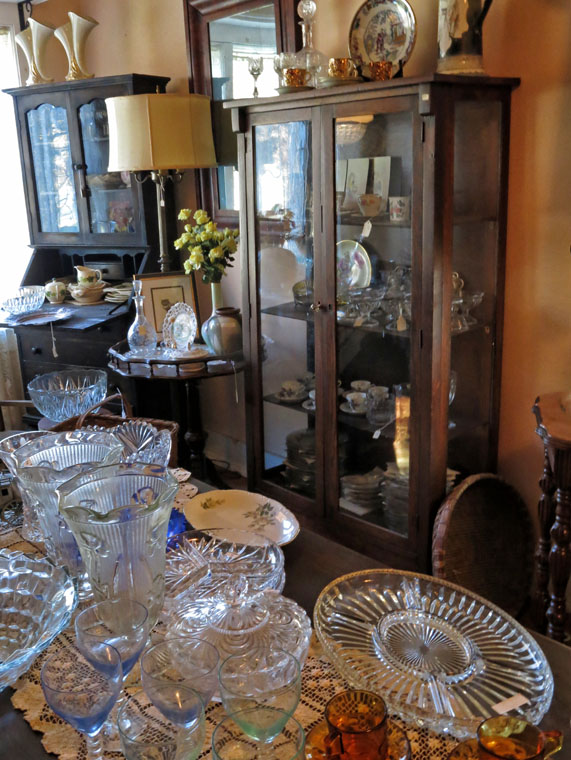
EdIMG_2040 TC sCindy’s path and mine first crossed at the Mountain Top Historical Society‘s annual Open House, where we were each selling our wares. Because of my interest in historic sites, for possible photographic subjects, I was attracted to the reproductions of historic postcards that she sells, and I bought some for future reference. Not long afterward, I met up with her again at — guess where — a postcard show sponsored by the MTHS at their Haines Falls headquarters. And so during one of my days of rambling round the Mountain Top with my camera, I stopped into Cindy’s store to see her in situ.

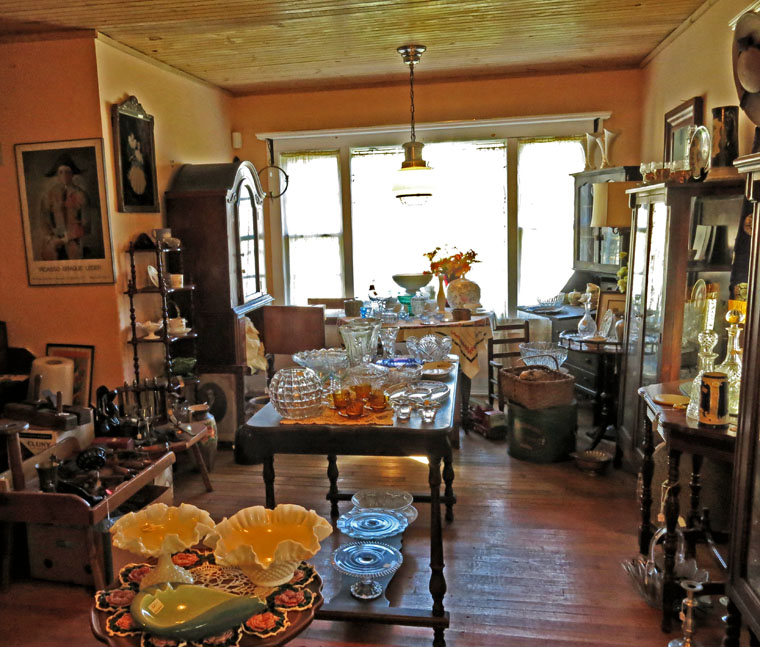
I was amazed at Cindy’s knack for filling these few rooms in this lovely old building with as many wares as possible without the effect being one of clutter and jumble.  Actually, the ambiance was warm and homey. I loved it.  In addition to the gently used items — “Old Treasured Belongings,” as she calls that side of her business — she also operates “Handmade by Cindy,” items she makes herself. Handbags in various styles and colors, scarves — you name it.  In addition to her store, Cindy can be found at the many Holiday Craft Fairs in the area. I believe she and I will both be selling at the Craft Fair in Windham on December 14.EdIMG_2040 TC s

These are some photos I took inside Cindy’s store (with her gracious permission, of course). I’ll be processing some photos as “vintage” images and will post them on my photo blog when they’re ready.

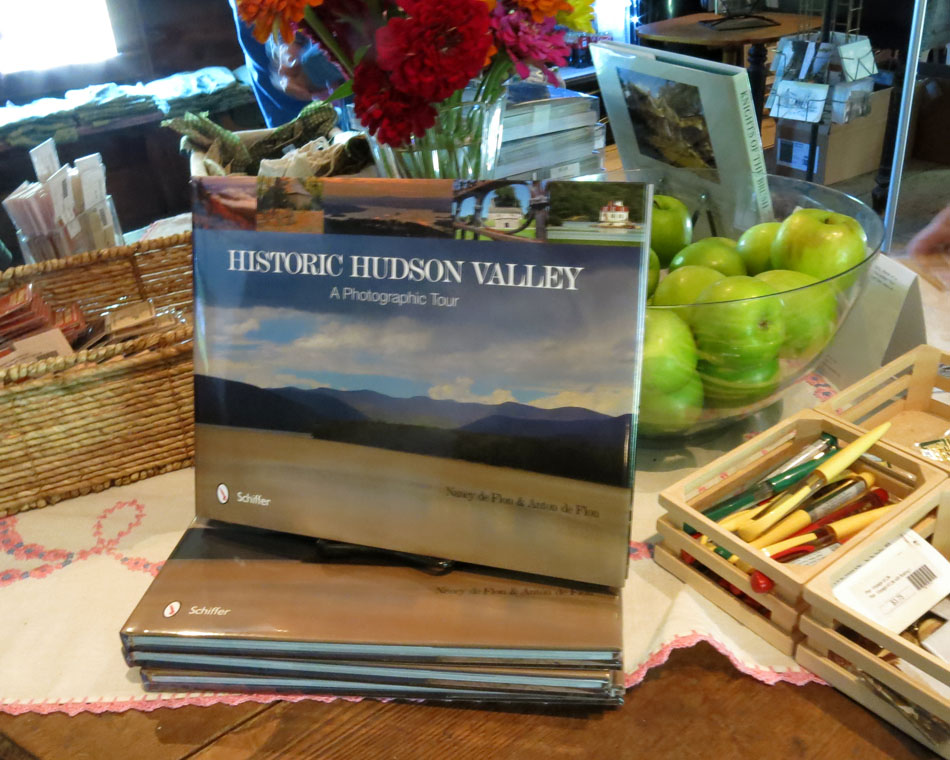
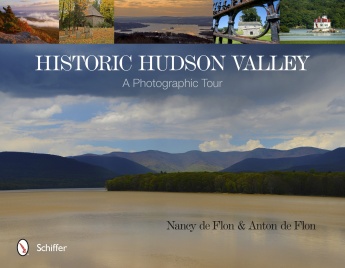
Speaking of photos, you can now purchase signed copies of my book Historic Hudson Valley: A Photographic Tour at the Tannersville Antique & Artisan Center! Be sure to check out this fabulous shop and gallery run by Rick Thomas.  Actually, it was Cindy Smith who first alerted me to this Center — another example of the close-knitted artistic community on the Mountain Top.
Ed IMG_2036 s TC


Scenic Hudson 50 Years

IMG_1720 s

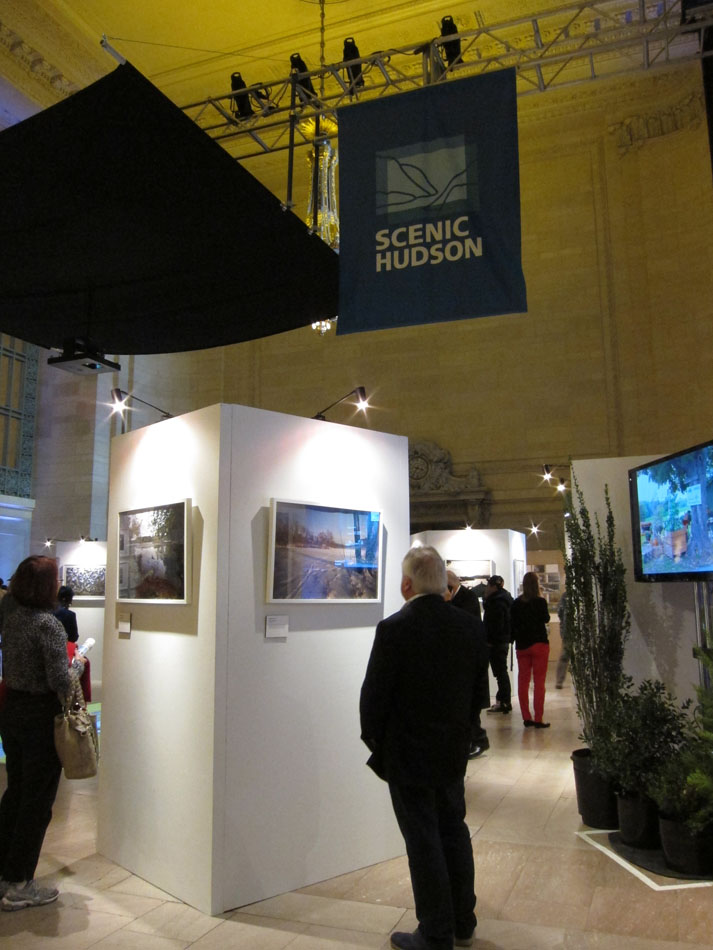
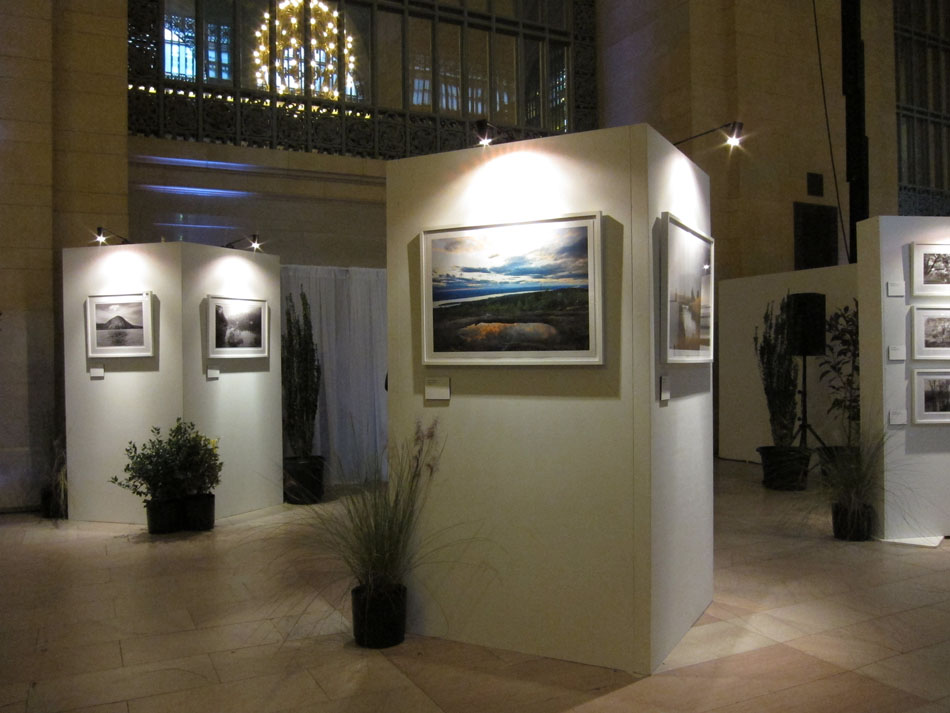
The fiftieth anniversary of Scenic Hudson was celebrated yesterday with a magnificent exhibition in Grand Central Terminal’s Vanderbilt Hall. Twelve outstanding photographers from the Hudson Valley contributed their work that (to quote from the special brochure) “resonates with the organization’s mission and major achievements while also addressing the complex conservation challenges on the horizon.” The variety of content and artistic approaches displayed by these photographers was amazing–a tribute to the IMG_1721 sbeauty and sublimity of the Hudson Valley landscape and to the challenges that face Scenic Hudson in ensuring that this beauty and the ecological health of our region are preserved for all the future.    I would imagine that not since Robert Glenn Ketchum published his book The Hudson River & the Highlands has any photographer consistently documented, in an artistically compelling way, those conservation challenges the way Susan Wides and other artists in this exhibition have done. Susan’s work is inspired by the Hudson River landscape painters of the 19th century, and let’s not forget that the founder of the Hudson River School, Thomas Cole, is considered one of the first spokespersons for the American conservationist movement.

And then there are the photographers who speak eloquently by capturing this beauty so as to remind us of what a treasure we have and, by implication, what we stand to lose if we don’t act with foresight.  As always, Beacon-based Robert Rodriguez Jr. is a very great favorite of mine, and I sometimes visit the RiverWinds Gallery there to treat my eyes (and my soul, dare I say) to his work on display.

Scenic Hudson is responsible for some sixty parks that they have created or enhanced, and I’m grateful to Metro-North Railroad, and toIMG_1725 s the fine-art photographic paper company Canson Infinity, who donated the paper on which the photos were printed, for bringing to the attention of the thousands of commuters who pass through Grand Central Station’s portals each day the fact that it’s Scenic Hudson they have to thank for so many of the places that they likely visit and enjoy on weekends. Just to name a few that I’ve actually visited: Burger Hill, Esopus Meadows Preserve, Foundry Dock Park, and Walkway over the Hudson. And in visiting their website I was delighted to learn that on Thursday October 24 they celebrated the opening of the new park at the West Point Foundry Preserve at Cold Spring. Rest assured, I’ll be blogging about this historically significant site before long.

Colorful Poughkeepsie

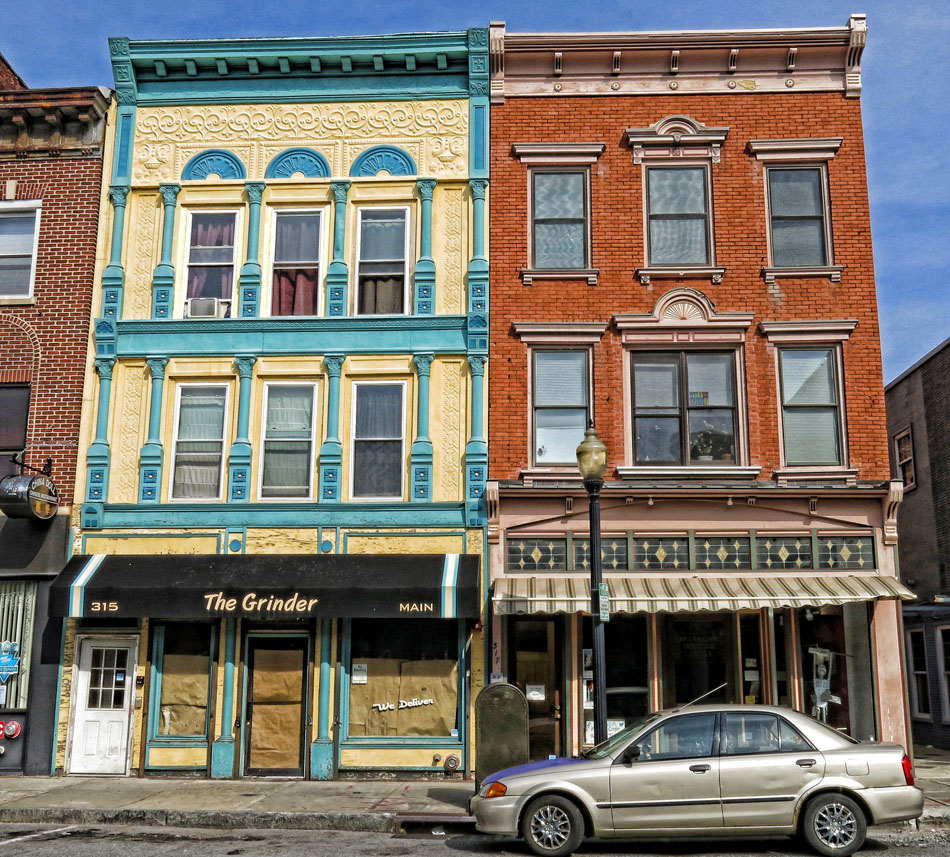
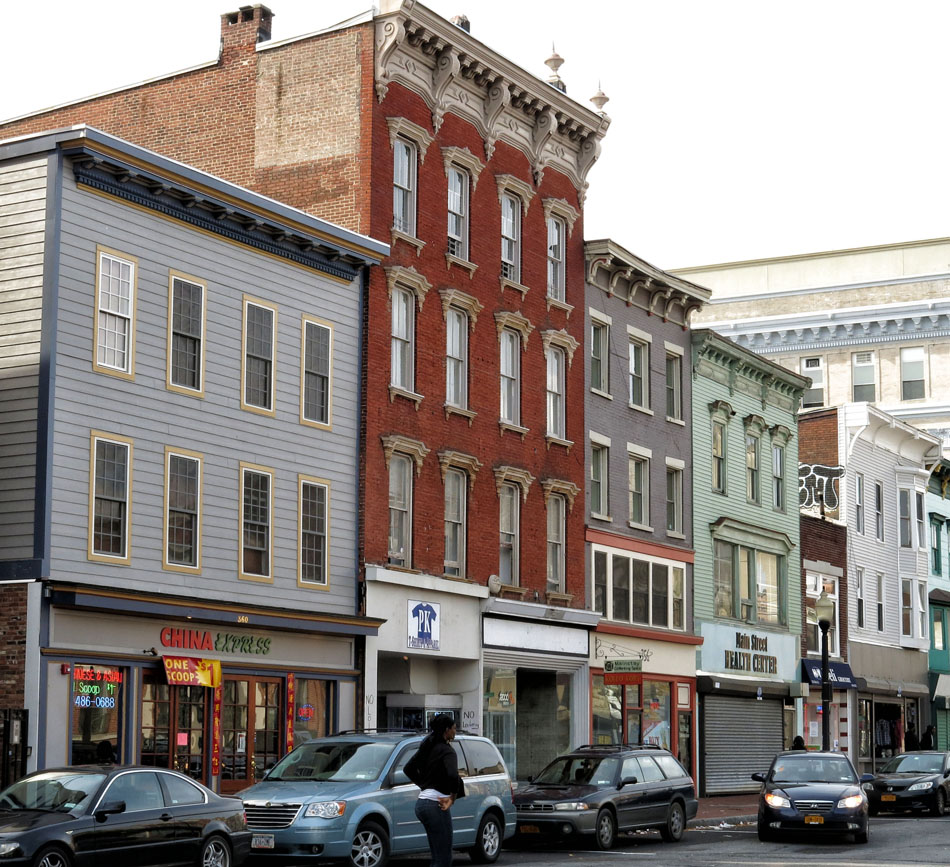
Poughkeepsie's historic Main Street district. The building on the right houses the Mid Hudson Heritage Center, where I'll be doing a talk and book signing on Thursday October 24.

Poughkeepsie’s historic Main Street district. The building on the right houses the Mid Hudson Heritage Center, where I’ll be doing a talk and book signing on Thursday October 24.

Poughkeepsie in Dutchess County has been an underexplored territory in my photographic repertoire, and yesterday I set out to put that right, especially since I’ve been invited to give a talk there at the Mid Hudson Heritage Center later this week, in conjunction with a book signing for our Historic Hudson Valley: A Photographic Tour.

The “Queen City of the Hudson,” as Poughkeepsie is known, is home to many sites of historical significance, including the Bardavon Theater. It also contains the eastern terminus of the 1.28-mile-long Walkway over the Hudson State Historic Park, the longest elevated pedestrian bridge in the world. The result of a determined community effort to transform an abandoned railroad bridge into something that people can enjoy, the Walkway stands 212 feet above the Hudson River and offers superb views.

Poughkeepsie boasts a number of historic districts. Here are some photos I’ve taken of the Main Street district. One of the buildings houses the Mid Hudson Heritage Center, one of the city’s leading cultural institutions.  My lecture and book signing (I’ll be talking about the Hudson River Artists and showing slides of some of their work and mine) is Thursday October 24 at 7.30 pm.  Join us if you can!

This amazing sculpture stands along Main Street. Can you find me in the picture?

This amazing sculpture stands along Main Street. Can you find me in the picture?

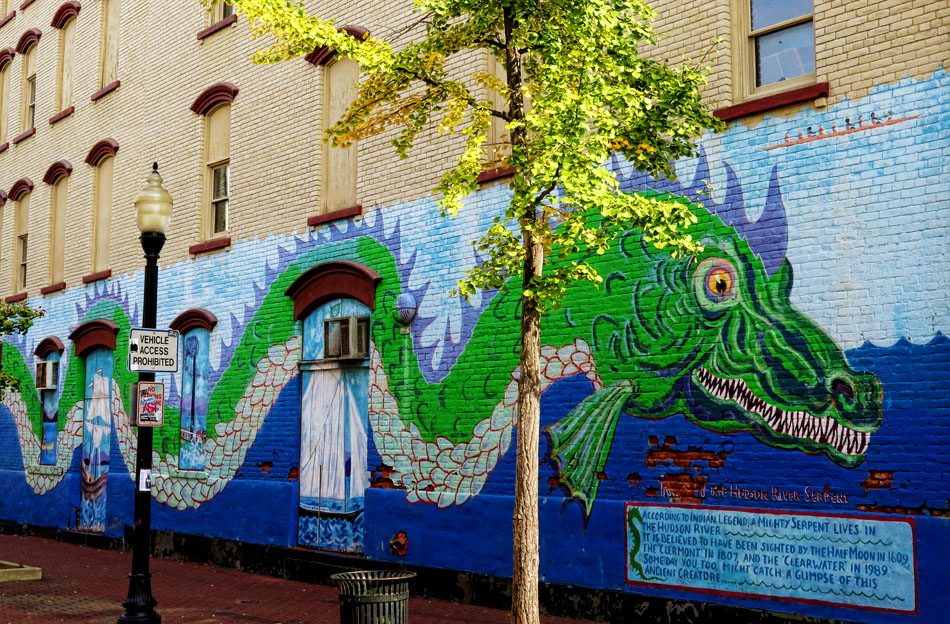
A mural about the Hudson's own "Loch Ness Monster." I once encountered him and dubbed him "Hudson Henry."

A mural about the Hudson’s own “Loch Ness Monster.” I once encountered him and dubbed him “Hudson Henry.”

Another view of Main Street

Another view of Main Street


Hudson River Painters: The Truth of Asher B. Durand

Opposites attract, so they say. That could well apply to the two foremost painters of the 19th-century Hudson River School, Thomas Cole (1801-1848) and Asher B. Durand (1796-1886). Of course, they had much in common, most notably their incredible artistic gifts and their love for being outdoors in the open, away from the noise and bustle of the city. (If they complained about the noise and bustle then, can you imagine their reaction if they were to visit it today?)

But when it came to the details — to each man’s individual approach to their work — Cole and Durand were quite different. As a photographer, I like to put it this way: If they were landscape photographers working today, Cole would have been one of the first to own a digital camera and to take full advantage of all that Photoshop has to offer in the way of processing the photos. Durand, on the other hand, would still be using a film camera — one of those large-format ones, no doubt — and would make only the most minimal use, if at all, of photo processing software.

Durand painted what he saw. It’s as simple as that. He was one of the first in America to use the plein air technique, meaning that he actually painted outdoors, painted immediately what he saw. Some of his paintings are so exact that it’s possible even today to identify the spot from which he painted a particular scene.

Durand, Beacon Hills

Durand, Beacon Hills

One such painting is Beacon Hills on the Hudson River, Opposite Newburgh. Durand’s business was such that he had to live in New York City, but he took every opportunity, especially in the nice weather, to get out and travel, not only to paint but also to walk and fish (he was an avid sportsman). For a few years (roughly late 1840s–early 1850s) he owned a vacation home in or near Newburgh, in Orange County, from which one can look right across the Hudson River to Beacon, and it was there that he painted this picture (above).

DSC0117 Nik s

Since I don’t live far from Newburgh, I decided to test it out. Armed with my camera and my intuition, I drove up Route 9W and parked along Water Street. On the side of the street opposite the riverfront a hill rises up, leading to some homes as well as to the city’s historic district. Since Durand painted his picture from a height, I walked up the hill with my camera and tripod. It was easy, instantaneously to see what Durand had painted. Compare the contours of the mountain peaks to see what I mean.

I didn’t aim either to replicate exactly the contents of Durand’s painting (impossible anyway–there’s now a railroad running through the scene, apparently one reason why he gave up the house after three years or so) or to process my photo to resemble the painting. Interestingly, Durand loved clouds–he was of one mind with the English painter John Constable in that–and may well have envied the sky I had that day.

Durand, Dover Plains

Durand, Dover Plains

Another scene Durand painted that is claimed to be so exact that the spot can still be located is Dover Plains, Dutchess County, New York. Dover Plains is near the Connecticut border and is, as I discovered, a challenging drive. I probably shouldn’t have trusted directions that say “When you pass the last house…” (last house where?), but I drove around and around and never found the spot. If anyone reading this can help me out, I’d be very grateful. Otherwise, one day I’ll conscript a volunteer into driving me there so I can watch out for the view.

This photograph isn’t in our new book, Historic Hudson Valley: A Photographic Tour, but plenty of other good photos are! Check it out here.

The Resurgence of Catskill Village

Ed IMG_1697 s

You don’t have to live in New York State to have heard of the Catskill Mountains—such classic American authors as Washington Irving have made sure of that—but the village of Catskill? Well, its reputation doesn’t spread quite so far—at least, not now and not yet.

Ed IMG_1691 sIt wasn’t always the case.

Despite its name, Catskill isn’t a mountain town—it’s a river town, a very old river town, and therein lie its history and its claim to fame. Native Americans were on hand to greet Henry Hudson when he reached what is now Catskill on his voyage up the river that bears his name. The first Dutch settler, one Killiaen van Rensselaer, likely came to Catskill in 1630. Catskill was incorporated as a village in 1806. Even before this, it had established its importance as a crossroads for commercial and leisure travel. The Susquehanna Turnpike, completed in 1801, had Catskill as its terminus. Thus Catskill became a major point for travel to the American West. Travelers coming up the river from New York—before decent roads were built, steamboats were the method of transportation—would change at Catskill for Albany or Montreal to the north, or the Berkshires or Boston to the east.

One of Catskill’s most renowned residents, as is well known, was Thomas Cole, founder of the Hudson River School ofEd IMG_1684 s painting. But did you know that Samuel Wilson, the original prototype of the popular “Uncle Sam” figure, was also based in Catskill? Wilson was a government meat inspector who was responsible for stamping “U.S.” onto shipments of meat bound for West Points and other destinations to the south during the war of 1812—hence “Uncle Sam.”

The 19th and early 20th centuries were prosperous times for Catskill. In addition to tourism—in Main Street alone several nice hotels welcomed longer-term vacationers as well as tourists wanting to spend a night here either before or after a sojourn in the Catskill Mountains to the west—the shipbuilding, tanning, and other industries flourished here. By the mid-20th century Catskill entered a period of decline, but its bicentennial, celebrated in 2006, provided impetus for a revitalization, as residents and owners of buildings were encouraged to breathe new life into the classic architecture.  Local historian Ed IMG_2864 sRichard Philp, author of Catskill Village in Arcadia Publishing’s Images of America series, credits the restoration of Thomas Cole’s house Cedar Grove, now a National Historic Site, as a major factor in Catskill’s rebirth.

Here are some photos I took last Sunday on a walk through Catskill, along with one I took earlier of the Catskill Country Store. I stopped in for an enjoyable chat with proprietor Carol Wilkinson and can highly recommend her coffee and other tasty products. The Thomas Cole House was having its annual Open House, so some of the photos are from that unfailingly enjoyable event.

Drinks, snacks and lots of fun abounded at the Thomas Cole site’s Open House! This was also a great opportunity to see the current art exhibition on 19th-century painter Albert Bierstadt for free.Ed IMG_1703 s


Ed IMG_1706 sThomas Cole himself was on hand to greet visitors.


Last but not least: Our book Historic Hudson Valley was for sale at the Visitor Center!Ed IMG_1702 s

Nothing Is So Beautiful as Spring

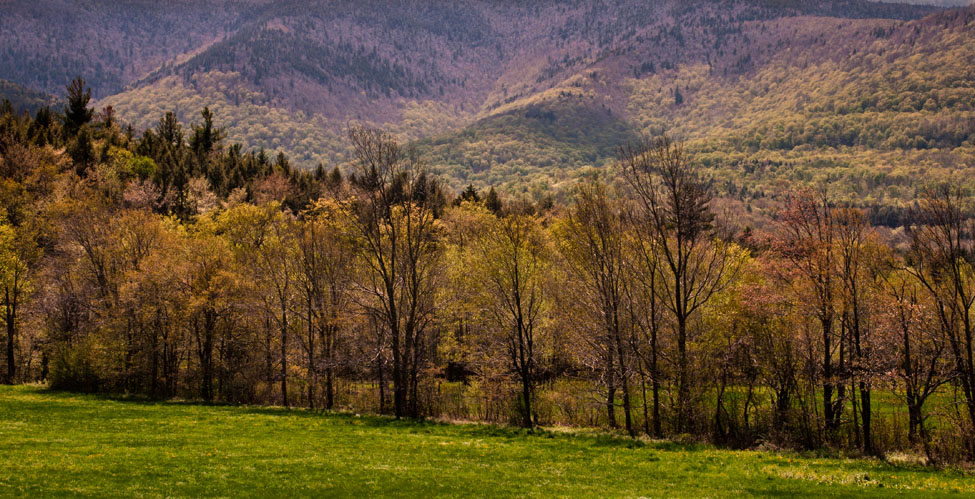
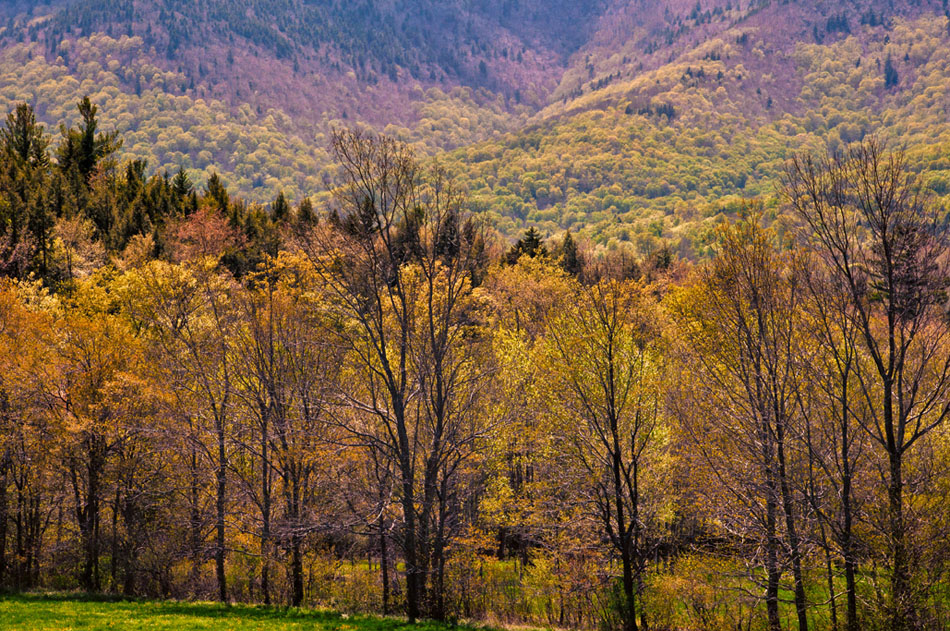
What’s this? Am I channeling Gerard Manley Hopkins? Well, in thinking of an appropriate title for this blog post I didn’t think the great Jesuit poet would object if I borrowed the opening line of one of his best-loved poems. It seems appropriate if for no other reason than that the images I’m about to share with you illustrate the truth of that statement: “Nothing is so beautiful as spring.”

I was just sharing these pictures with the readers of my photo blog and describing how I processed the images. I’ll spare you those details — just thought you might enjoy seeing the beauty of the Northern Catskills in the second week of May, a time of year whose color to me is second only to fall. In fact my son, Anton, once referred to spring as “pre-fall.”

The first two images are actually completely separate photos and not two different versions of the same original. If you’d like to comment, I’d be interested in hearing which of the two you prefer.

DSC0224  levels 236 s

DSC0226 s

DSC0228 s

Mountain Top Historical Society, Your Hosts in Haines Falls

DSC0003 ed Top crisp 8 x 10 - s

Memberships and magazine subscriptions come and go–I’m sure you know the feeling as well as I do–but there’s one organization of which I’m pleased to say I’ve been a continuous member for a number of years, and that’s the Mountain Top Historical Society (MTHS). Based in Haines Falls along Route 23A (the same daunting road that takes you up (and up C DSC0102 sand up) through Kaaterskill Clove, the MTHS was founded some forty years ago with the mission of “of discovering, interpreting, sharing and preserving the artifacts and documents that tell the story of the towns and the people of the Great Northern Catskills” (from its website). The variety of events offered by its dedicated band of directors and volunteers ensures that there’s something to satisfy all interests — from historical lectures to art exhibits to hikes. The archives preserve invaluable information and artifacts related to regional history, and the quarterly publication Hemlock offers articles of historical interest as well as updates on its activities.

875 small copy sAmong the regular activities of the MTHS is its annual Open House, held on a Saturday in late August. Come along and you’re sure to enjoy entertainment, an informative lecture and possibly an art exhibit, food–and vendors.  Local farms display and sell their produce, local craftspersons their handiwork, and regional artists, including photographers, their works of art. Master photographers Francis X. Driscoll and Larry Gambon are welcome regulars. This year Anton and I will be “vending” for the first time, selling and signing our new book Historic Hudson Valley: A Photographic Tour and ourBook cover photographs. Here’s a sneak peak at a few of the images we’ll be selling.

DSC0195 - HDR adj cr sThe MTHS Open House for 2013 is Saturday August 24 from 11 am to 5 pm. Hope to see you there!

WKNY, a Good Local Radio Station

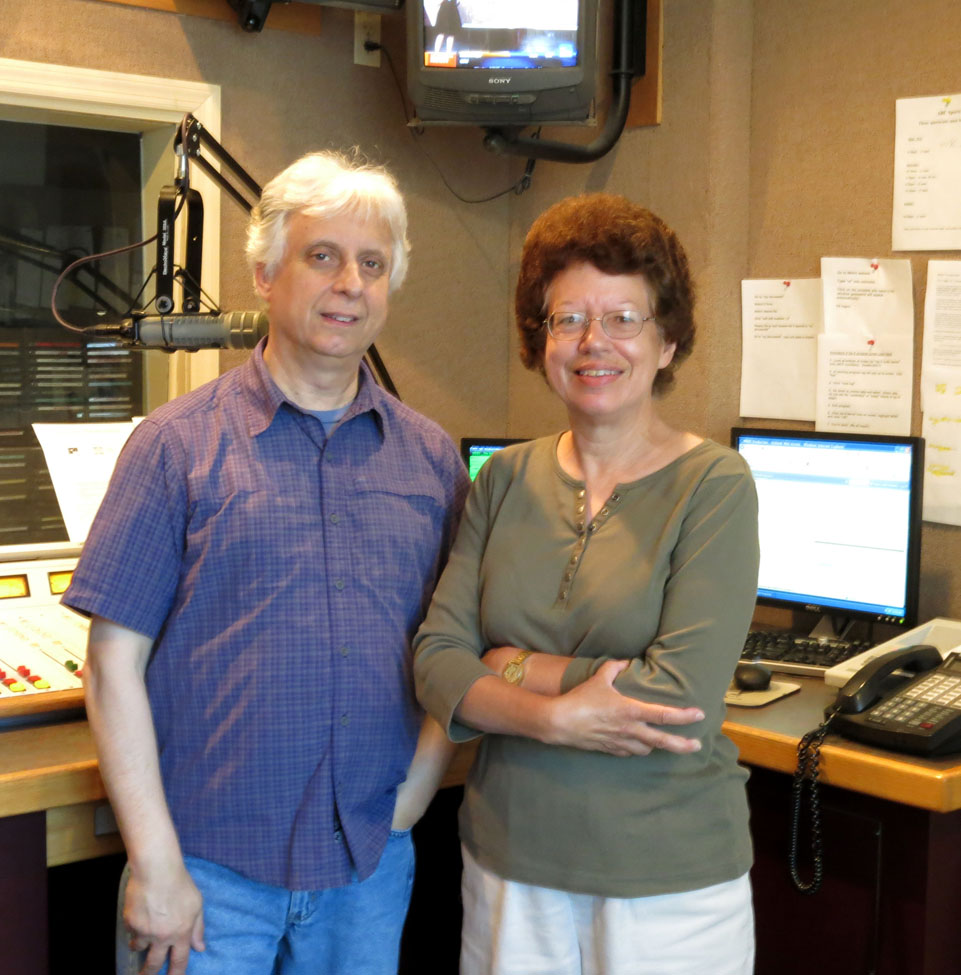
Here I am with radio host Warren Lawrence after our interview.

Here I am with radio host Warren Lawrence after our interview.

Last week I drove up to Kingston to do a radio interview promoting our new book, Historic Hudson Valley: A Photographic Tour. While it would have been possible to do this by phone from home, I prefer face-to-face contact and getting actually to meet people. In this case, it was well worth the trip. Warren Lawrence, who is the Program Director for WKNY (1490 AM) and who invited me, is also the Morning Show host, and it was energizing to see him in action. It would be hard to find someone more dedicated to this work, and once we got talking, we were on a roll. I hope he enjoyed it as much as I did!
Since WKNY is a local AM station whose signal doesn’t reach as far as

When Warren told me the radio station was next to the Big Bubble Laundromat, it proved very easy to find!

When Warren told me the radio station was next to the Big Bubble Laundromat, it proved very easy to find!

where I live, I listened to Warren’s morning program a couple of times streaming online to familiarize myself with the content and dynamics. It is definitely at least a notch or two in quality above some other local stations, including some FM stations whose signals reach much farther. Notably, neither the music nor the talk revolve around the latest celebrities. Another recent guest, for example, was a lady from the Hudson Highlands Nature Museum in Cornwall, Orange County. It’s gratifying to see this lovely museum being publicized as an alternative to water parks as a place to take children on a summer day. And as for the music–well, when Warren played Roberta Flack from 1972 singing “The first time ever I saw your face,” I knew I was far away from being beaten over the head with the Top 40.

If you’re driving north on the Thruway in the Hudson Valley and are looking for quality radio to keep you company, you should be able to pick up WKNY’s signal beginning around Exit 17 (Newburgh). When I left Kingston after this delightful experience, the signal stayed with me all the way to Rhinebeck, my next stop (more about that another time), across the Kingston-Rhinebeck Bridge to the east.

Mountain Top Historical Society Exhibit Highlights Twilight Park

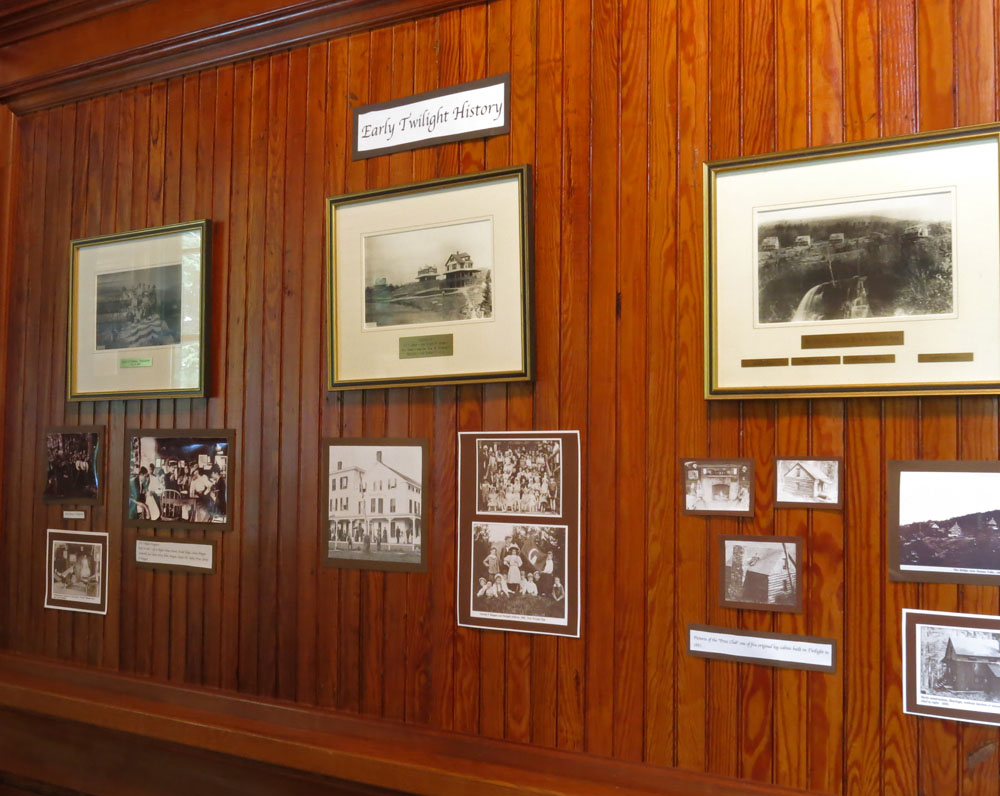
Ed IMG_1414 sThe Mountain Top Historical Society (MTHS), based in Haines Falls, is simply amazing for the amount of work they do to preserve, chronicle, and educate people about the history and culture of this area of the Catskills called “the mountain top” — think Route 23A in Greene County, Hunter, Tannersville, Haines Falls, and you get the idea of the location of this fascinating region. Yesterday I journeyed to the MTHS’  beautiful 20-acre campus to view their current exhibition celebrating the 125th anniversary of Twilight Park.

Ed IMG_1419 sHow to describe Twilight Park? Discreet. Low key. If you’re driving west on 23A, keep your eyes peeled for the left-hand turn once you exit Kaaterskill Clove or you’ll miss the entrance.  Twilight Park is a summer community founded by Charles T. Wingate in 1888, at a time when such communities were growing in popularity. It didn’t take long for the new community to experience considerable growth: by July 1888 there were already six log cabins, five cottages, a clubhouse, a pharmacy, and tennis courts. Sports of all kinds have been a mainstay of Twilight Park, as have the arts. The first exhibit of the Twilight Park Artists was held in August 1947. Originally begun as an experiment exclusively for Twilight Park residents, the show is now open to all artists and is held the second weekend of August.

Ed IMG_1420 sThe MTHS exhibit celebrating the 125 years of Twilight Park is a comprehensive and varied collection of memorabilia that brings to life this Northern Catskills summer community. Sports trophies abound, as do visuals documenting the community’s ongoing interest in and involvement with the arts. There is even a tea set from the days when the Ladies Auxiliary held tea lunches to benefit the local church.

The exhibit is in the restored Ulster & Delaware Railroad Train Station on the MTHS campus. Enhancing the exhibit will be two upcoming lectures. On Friday July 12 at 8 pm, historian Bob Gildersleeve and Joanne Ainsworth, author  of We Are Creating a Community, will present “Creating a Community: Early Images of Twilight Park” in which they will introduce glass plate negatives that have been donated to the Society by Dr. Stanley Leavy. On Friday July 19 at 8 pm Nicholas Lemann will present “The Prehistory of Twilight Park,” focusing on Charles Wingate, the Twilight Club in New York City, and the historical and intellectual thinking that gave rise to Twilight Park and similar communities.

IMG_1416 s

If you’re interested in the history of an amazing community in the Northern Catskills and want a great introduction to the tireless work of the Mountain Top Historical Society and its picturesque surroundings, I can highly recommending attending one of these events. Visit the MTHS website for further information.

Book coverIN OTHER NEWS: Our book Historic Hudson Valley: A Photographic Tour is published this month! Click the image for details.

St. Mary’s of the Mountain Church, a Historical-Cultural Landmark

DSC0018 2

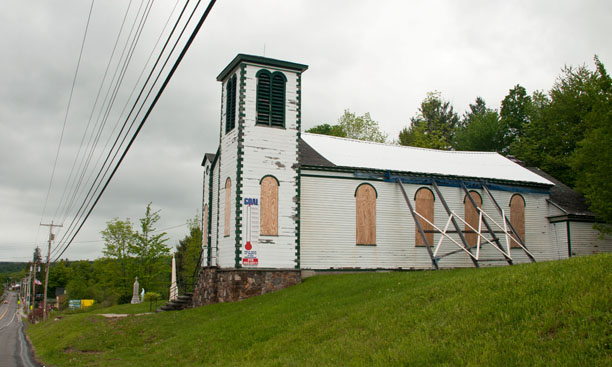
I enjoy photographing historic buildings and have lately gone in search of the ones in and near the Mountaintop region of the Greene County Catskills. Some I’ve discovered simply by wandering around, some from the classic book Picturesque Catskills, and some have been suggested by Carolyn Bennett of the Catskill Mountain Foundation in Hunter. I’m particularly grateful to Carolyn for having put me on to Saint Mary’s of the Mountain Church, right down the road on Route 23A in Hunter. Built in 1839, Saint Mary’s of the Mountain is the oldest Catholic church in the Catskills. It served the Irish and German immigrants who settled in the Catskills to work in the tanning, cotton, and lumber industries.

DSC0025 sThe Diocese of Albany, in which Hunter is located, closed the church in 2002 and planned to demolish it. Fortunately, a group of local citizens banded together to save the church, and in 2011 the diocese transferred the title to the Village of Hunter.  Saint Mary’s of the Mountain is listed on the National Register of Historic Places.

The unforgiving Catskill weather hasn’t been kind to this historic church and it is sorely in need of repair and restoration. The committee is actively raising funds to ensure that this beautiful historic landmark can be restored and preserved. I will be adding my own efforts to this project, but meanwhile I wanted to share with you a few of the photos I took during a recent visit. It was toward the end of May and fresh snow had been falling on the top of Hunter Mountain–real snow, not fabricated ski snow–a glorious day!

Please consider making a contribution, even a small one, to the church restoration project. Check out their Facebook page or send checks made out to “Village of Hunter St. Mary’s Fund” to PO Box 934, Hunter NY 12442. Every little amount adds up. Every little amount brings this historic church closer to the day of its former glory.

Also — great news! — our book Historic Hudson Valley: A Photographic Tour is now available!

DSC0044 sDSC0030 ed 3'5 x 5

DSC0049 sDSC0038 s