Cultural Happenings in Prattsville and Hunter

OLYMPUS DIGITAL CAMERA

It’s been nearly three years since Hurricane Irene devastated Prattsville. Driving through there on Sunday I noticed some all too obvious signs of the destruction in the form of homes that were so ruined, their owners are likely to have abandoned them never to return. The Zadock Pratt Museum, cultural gem of Prattsville, is slowly recovering from the damage it sustained, thanks to the indomitable spirit of  group of dedicated people.

The Museum was originally the Homestead of Zadock Pratt, who founded the town named after him in the 19th century. Pratt led quite an adventuresome life: New York State militiaman, soldier in the War of 1812, member of the U.S. House of Representatives, founder of what was the largest tannery of the world in its time.  He built the town of Prattsville to accommodate the huge labor force needed to operate his tannery.

The Pratt Museum was dedicated to preserving Zadock Pratt’s papers and belongings and a wealth of other material that told the story of life in this part of the Northern Catskills in the 19th century.  Then came Hurricane Irene. The Museum was inundated with flood waters, and just about everything in it went floating down the Schoharie Creek. Thanks to the diligence of Carolyn Bennett (director of the Catskill Mountain Foundation) and many other dedicated people, most of the material was recovered. But it was, of course, soaking wet, and is now in a deep freeze awaiting a day when they can afford to thaw and restore them. During my visit on Sunday, Suzie Walsh, who now manages the Museum and is incredibly knowledgeable about everything to do with Zadock Pratt, the Museum, and the history of the town, showed me the marks where the water had reached in the house. It’s a wonder there is anything left.

But they don’t give up. They are still using the premises for cultural events. This year there is an exhibit titled “The Paintings, Watercolors, and Drawings of D.F. Hasbrouck, American Impressionist (1849-1979).”  What an amazing feat of organization went into amassing this exhibit of works by Dubois Fenelon Hasbrouck–they came from all over–and how beautiful and varied they are. Pay your $5 admission fee and Suzie Walsh will give you the tour and share all she knows about this undeservedly rather obscure artist.

After leaving Prattsville I headed to the Doctorow Center for the Arts in Hunter, where, under the auspices of the Mountain Top Historical Society, a new film about the Catskills was being premiered. Titled To Be Forever Wild, the film is the brainchild of David Becker, a gifted young filmmaker from Saugerties. This was another astounding feat of organization, recruiting and managing the cast and other workers and dealing with an intimidating mass of administrative work. To Be Forever Wild is available for sale on DVD and will also be broadcast on PBS beginning in August or September. Kudos to the Mountain Top Historical Society, and especially to Drs. Bob and Johanna Titus, for sponsoring the premiere of David Becker’s fine work.

Now about my upcoming events:
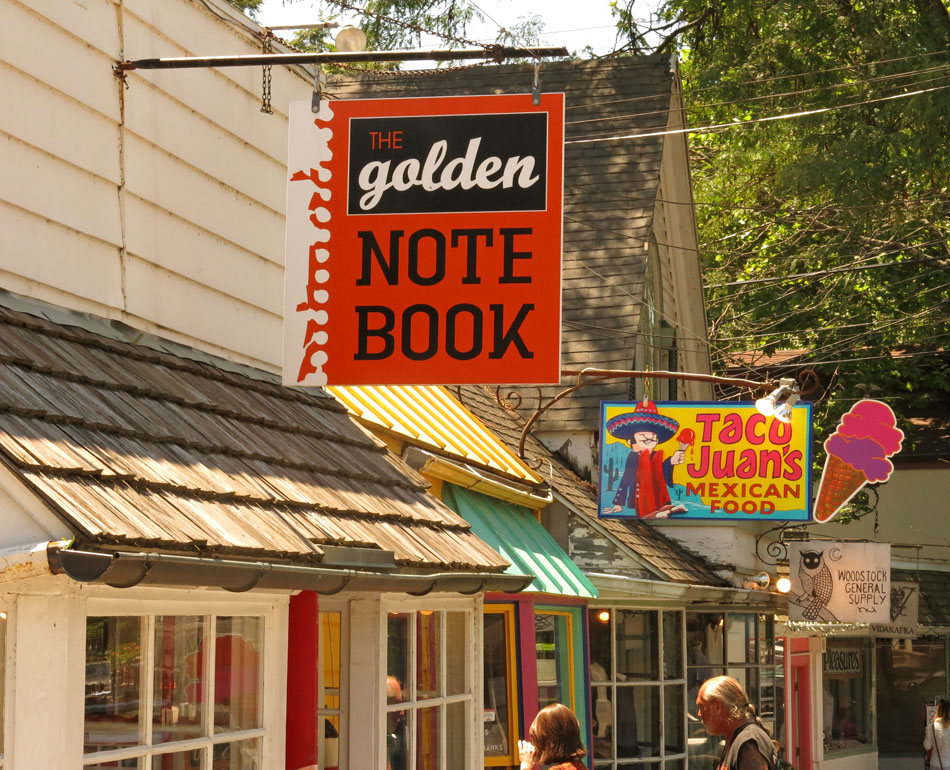
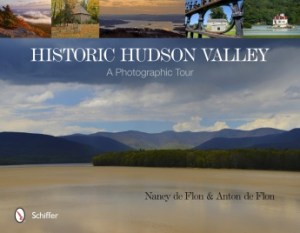
Ed IMG_2513 sSaturday July 26 at 2 pm in the Golden Notebook, Tinker Street, Woodstock: I’ll be giving a talk about the making of my book The Historic Hudson Valley: A Photographic Tour. Come hear my talk, see the exhibit of my photography (it’s for sale, and books will also be for sale, which I’ll be glad to sign for you), and support this wonderful independent bookstore right here in the Catskills.

Sunday August 3 from 2 to 4 pm at the Mountain Top Historical Society, DSC0003 ed blogRoute 23a, Haines Falls: This is the opening reception for my photography exhibit, Natural and Historical Landscapes. Come and join us! All artwork, and some extras, will be for sale throughout the show, which lasts until after Labor Day. The Visitor    Center is open weekends 10 a.m. – 4 p.m. and Monday, Wednesday and Friday afternoons 1-4 p.m.
I hope to see you soon!

Windham Art Fest Brings Sparkle to July 4 Weekend

Travel up Routes 214, or 296, or 42, or any of the other scenic roads that take you from Ulster to Greene County and beyond, and you’ll be treating yourself to the most gorgeous rural scenery you can imagine. Yet it’s not only a series of pretty pictures; it’s also an area packed with history—the history of farmers, innkeepers, and other intrepid folks who settled here and created Tannersville, Hunter, Windham, Prattsville, and the other places that dot this rolling, bucolic landscape.

Most surprisingly, perhaps, is that this Catskill region called the Mountain Top is bursting with cultural life. Music, drama, the visual arts – you name it, there is no reason to miss New York City when it comes to culture; the Mountain Top has it all.

This past Saturday I was privileged to participate in the annual Art Fest organized by the Windham Arts Alliance. A wide variety of artists representing every medium from painters to pottery makers to photographers and wood crafters gathered under a huge tent on the lawn of Christman’s Windham House to exhibit and sell their wares: Iris Kaplan, Peter Liman, Robert Cepale, Bill Deane , Ray Shearer, and many other wonderful people—and then there was I. Here are a couple of booth photos.

An overview of some of the booths

An overview of some of the booths

My booth

My booth


Ed IMG_2485 sep s

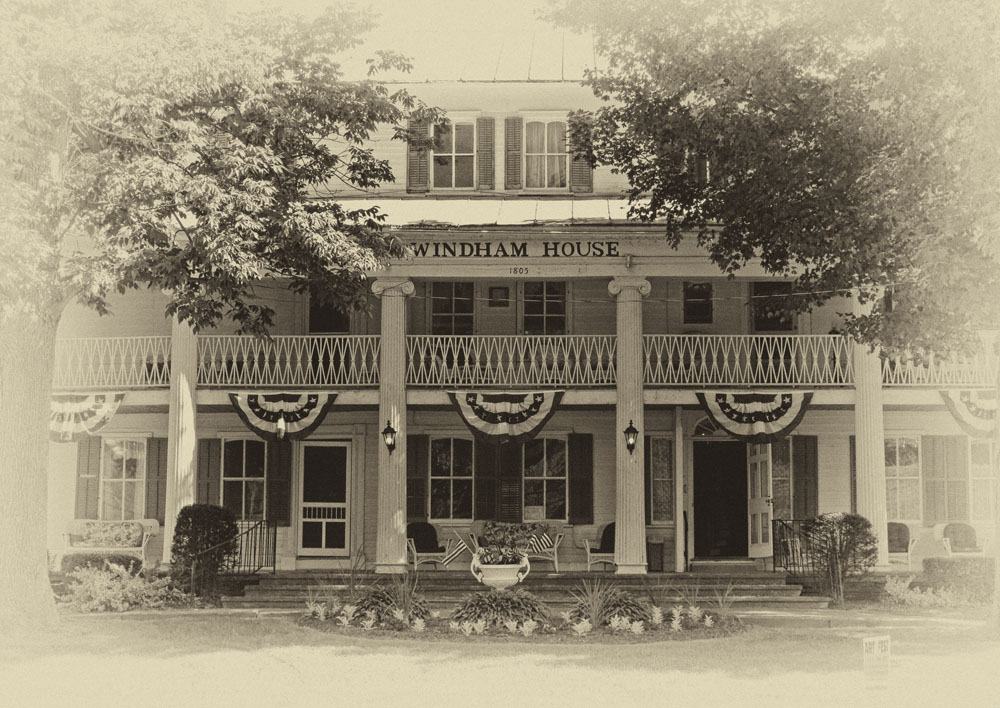
Christman’s Windham House is a treat in itself. This historic property began life in 1805 as a drover’s tavern on the Catskill Turnpike (note to self: find out to what extent present-day Route 23 coincides with the Catskill Turnpike). A major factor in its enduring success for over 200 years has been its ability to adapt to changing needs and changing fashions in the use of leisure time. Today, along with the overnight accommodations, Christman’s offers such service as the premier golf course in the Northern Catskills and the possibility of booking wedding receptions.

The following day I hung my show at the Golden Notebook in Woodstock! I’m looking forward to giving my talk there on July 26 and hope you can make it, or can visit my show (it’s on the second floor) this month. More about that later.

Tannersville Antique and Artisan Center: Don’t Miss It!

Manager Rick Thomas welcomes you to the Tannersville Antique and Artisan Center.

Manager Rick Thomas welcomes you to the Tannersville Antique and Artisan Center.

On a recent visit I ran into photographer Fran Driscoll and his friends.

On a recent visit I ran into photographer Fran Driscoll and his friends.

In the short time it has been in existence–it celebrates its first anniversary on July 6– the Tannersville Antique and Artisan Center has evolved into a major presence in the vibrant Northern Catskills art world. An outreach of the Hunter Foundation, the TAAC is appropriately located on Route 23A,  just a few miles from the famed Kaaterskill Falls, a beloved subject of landscape painters at least since Thomas Cole first painted it in the 1820s.

The TAAC’s vendors represent an impressive mix of local artists and antique collectors. From prints, paintings, and photographs to rugs, chairs, and other items awaiting new owners to love them–and let’s not forget the books on the history of the area–, the TAAC truly does offer something for everyone. All is under the skillful management of Rick Thomas, who has made this space in a renovated 19th-century building a pleasure to walk through. Walk in the door and you’ll get a friendly greeting from Rick, who welcomes you to have a leisurely look around in the two-floor space.

Rick’s hospitality extends as well to organizing talks by the TAAC vendors. Recent speakers have included famed Northern Catskills photographer Fran Driscoll and historian/author John Ham. It’s a great way to get to deepen your acquaintance with the artists/collectors/authors and their works.

I’ll be giving a talk at the TAAC on Saturday afternoon June 28 at 3 pm–sharing Book coversome tips on how I approach my photography, especially my work in the Hudson Valley and Catskills, and perhaps whipping up your enthusiasm to get out and take your own photographs of this beautiful region. Also, we’ll have our book Historic Hudson Valley: A Photographic Tour available for sale, and I’ll be glad to sign the book for you as well! I look forward to meeting you there.

The Tannersville Antique and Artisan Center is open year-round Thursday through Monday from 10 am to 6 pm. Like them on Facebook to get the latest news.

While you’re in the area, don’t miss the chance to enjoy a meal in one of Tannersville’s fabulous restaurants. My personal favorite? The Last Chance, which also sells cheese and other irresistible food items (such as chocolate!!!) for you to take home.

Great Concerts in Cold Spring

Ed IMG -2362 s


If you enjoy high-quality concerts of good music, Cold Spring is a great place to keep in mind. The Chapel Restoration, for example, presents a series of performances each year, and yesterday I attended the second concert in their Music Series 2014. It was given by the choir of St. Philip’s Church from nearby Garrison, and the program was sheer heaven for those who, like myself, enjoy the great tradition of sacred choral music. Directed by

Concertgoers and choir members mingle after the concert.

Concertgoers and choir members mingle after the concert.

their leader Durward Entrekin, the choir offered an amazing range of pieces from sixteenth-century motets by Palestrina and others to contemporary works by Morten Lauridsen and Pete Seeger.  (Pete Seeger? Yes – a moving setting of his “To My Old Brown Earth,” definitely a not-a-dry-eye-left-in-my head sort of piece. And what could be more appropriate than performing Pete Seeger at a venue near his Hudson Valley home?) In between, we had Fauré’s always stunning Cantique de Jean Racine and the Kyrie from Haydn’s Nelson Mass with the excellent soprano soloist Julie Heckert.

These concerts take place in the historic chapel overlooking the Hudson that began life as the Chapel of Our Lady to Ed IMG - -2361 sserve the workers in the West Point Iron Foundry just south of Cold Spring. Many of these workers were Irish, and this chapel was built in the 1830s to serve their religious needs, probably the first Catholic Church in New York north of the city.

Ironically it was that same West Point Iron Foundry, when it went on to become a major producer of Civil War armaments (the famous Parrott gun was made here), that began causing damage to the chapel due to the frequent test firing. A series of further problems was set in motion that led to the chapel being abandoned in 1906. It was then ravaged by fire in 1927. This once impressive building was a ruin until 1971, when a small group of people, including actress Helen Hayes, banded together, bought it from the Archdiocese of New York, and undertook to restore it.

Today the chapel is used for cultural events and can be booked for weddings as well. If you’re in the Cold Spring area, it’s definitely worth taking a look and, on weekends, couldn’t be easier to get to – it’s just opposite Cold Spring’s Amtrak Station, where parking is free on weekends. Right next to the chapel is the Foundry Dock Park with commanding views of Constitution Marsh and, on the opposite side of the river, the U.S. Military Academy.

For more information on the chapel, visit the Chapel Restoration’s website.

For more photos and history of Cold Spring and many other sites in the beautiful Hudson Valley and Catskills, check out our book, Historic Hudson Valley: A Photographic Tour. Contact me to learn how to get a signed copy.


Hunter Foundation and Albany Institute

DSC0224  levels 236 s

Happy Easter, happy spring! It looks as if the long winter is finally over, and with that comes new activity. I just want to tell you about two special activities coming up:

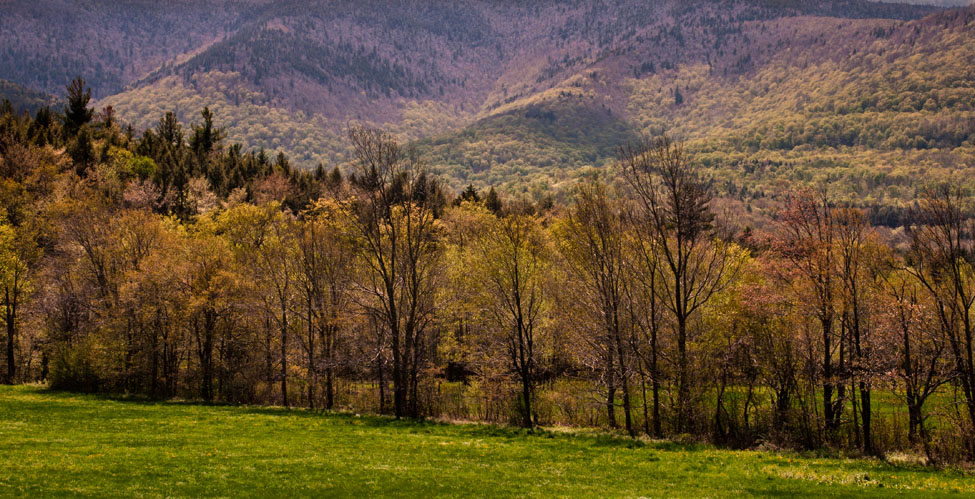
The Hunter Foundation’s 2014 Online Auction begins today, Earth Day. The Hunter Foundation is located in what IMHO is the most beautiful area in the Catskill region; you can visit their website to learn about their mission and goals.  I had the honor to be invited to donate one of my photographs to their auction and so I chose one of my most popular ones, Catskill Woodland Glow (shown above). The winner will receive this, beautifully framed, along with a copy of our book, Historic Hudson Valley.  Please visit their website to see the page for my entry — there are many good prizes here, it’s for a worthy cause, and I hope you’ll bid on something to help the Hunter Foundation and perhaps win something you’ll enjoy.

Also — this Sunday Anton and I will be speaking about our Historic Hudson Valley at the Albany Institute of History and Art! That’s Sunday April 27 at 2 pm. We’re quite excited to be speaking at the place that houses not only one of the most impressive collection of Hudson River School paintings anywhere but also the complete collection of Thomas Cole’s papers!  Here is the AIHA home page — you can get directions there — and here is the page featuring our talk. Hope to see you there!

Bardavon Theater Presents Met Opera Treats

Ed IMG_2081 s

One year ago I blogged about the Metropolitan Opera’s new production of Parsifal, shown live in HD at the UPAC in Kingston (you can read that post here). Last week I attended the Encore HD performance of the Met’s new production of Massanet’s opera Werther, this time at the UPAC’s “sister theater” across the Hudson River, the historic Bardavon Theater in Poughkeepsie. “Encore” performances are the same as the “live” ones except that they’re not live but may be a day or a week  later; as with the live ones, in the Encore performances you get the same intermission features, including the interviews with the cast that actually took place during the intermissions.

Ed IMG_2202 sThis was my first time ever seeing Werther, which is loosely based on a novel by Goethe, and except for the tenor arias that I have on recordings by the great Nicolai Gedda I was unfamiliar with any of the music. I can’t say I particularly liked the opera — but I did enjoy the performance immensely. Vocally and visually the cast couldn’t have been more perfect. Both onstage and off, tenor Jonas Kaufmann looks the epitome of the handsome, dashing romantic hero, and the title role was as if made for him. Surprising, really, how demanding the role is, and it’s hard to imagine a tenor today who could navigate its challenges more successfully than Kaufmann.

French mezzo soprano Sophie Koch in the role of Charlotte gave a virtuoso performance as the young woman torn between being united with her true love, on the one hand, and, on the other, dutifully fulfilling her mother’s deathbed wish that she marry Albert, to whom she is now engaged. Lisette Oropesa was delightfully sweet as Charlotte’s younger sister Sophie, and David Bižić a steady, solid, if somewhat boring Albert (I’m referring to the character, not to Bižić’s performance) who nonetheless exhibited hints of a hard side when he thought himself crossed.

Veteran singer Jonathan Summers played the Bailiff, Charlotte’s widowed father. Here’s where the beauty of the close-up camera work of the HD rendition really shines: At one point a telling expression of misgiving flashed across his face when Charlotte’s upcoming marriage to Albert was mentioned. which I doubt could have been visible to the audience in the enormous opera house itself.

In the intermission interview Kaufmann spoke of the challenge of interpreting Werther in such a way that the audience doesn’t lose sympathy with him. He certainly did his best, but I think the production was working against him here, and by Act III you wanted to tell him, “Just take some Zoloft and get over it.”

This was my first time seeing a performance in the Bardavon Theater. The Bardavon has an amazing history. It started life as the Collingwood Opera House in 1869, and

If you want to grab a quick and tasty bite to eat before a matinee at the Bardavon, this historic diner is just down the street.

If you want to grab a quick and tasty bite to eat before a matinee at the Bardavon, this historic diner is just down the street.

during its heyday, which lasted into the 20th century, renowned artists such as John Philip Sousa, Edwin Booth, and Ignace Paderewski performed here. Converted in 1923 into a venue for vaudeville and silent movies, the theater eventually fell upon hard times and closed in 1975. It was actually slated for demolition, but a not-for-profit group was formed  that worked for revitalization, the theater was placed on the National Register of Historic Places, and the very next season the theater began its new life as the Bardavon.

Whatever kind of entertainment you enjoy, the Bardavon and the Kingston UPAC are guaranteed to have something for you. Why not check out their website and see for yourself?

View my fine art photographs of Historic New York, including one of Poughkeepsie’s Main Street, here.

Tower of Victory Needs Restoration

DSC0047 ed s

Washington’s Headquarters State Historic Site in Newburgh is one of the most scenic Hudson Valley sites related to the Revolutionary War. Here, at the stone house owned by Jonathan and Tryntje Hasbrouck, General George Washington and his wife,  together with officers and servants, lived between April 1782 and August 1783 while he reached decisions that were crucial to the shaping of the new republic after the war ended. Among other things, he rejected the notion that he should be made king, and he created the Badge of Military Merit — the forerunner of the Purple Heart.

Today this State Historic Site is open to the public, furnished as it would have been in Washington’s time, and holds reenactments and other events on historic dates such as Washington’s birthday. Located in Newburgh’s Historic District, it commands a magnificent view of the Beacon Hills on the Dutchess County side of the Hudson River.

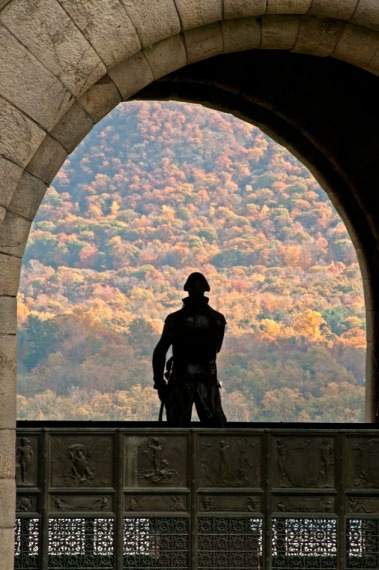
DSC0034 ed sAlso on the site is the imposing Tower of Victory, a monument commissioned by Robert Todd Lincoln 125 years ago specifically to commemorate the peace that followed the end of the American Revolution. Designed by the renowned architect John Hemingway Duncan, the Tower of Victory houses a bronze statue of General Washington sculpted by William Rudolf O’Donovan that shows the General looking across the Hudson River toward the Beacon Hills.

Time and weather have taken their toll on the Tower of Victory, and the Palisades Park Conservancy must raise $1.5 million in order to restore the stone structure, replace the roof, and eliminate water penetration. Fundraising projects are in place and have already had good results, but more is needed. To learn more and/or to donate, visit the PPC’s website.

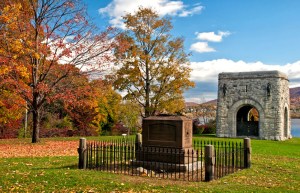
If you would like to own a fine art photographic print of the Tower of Victory, I am donating 10% of the profits from the sale of the photograph at the top of this post  to the Restoration Fund. Click on the photo, or here, to view the photo in a larger size and to get to my website.  I hope you’ll consider supporting the efforts to keep this important American monument alive and well for the next 125 years. Thanks so much!

Happy Birthday, General Washington

ed-0353 opalotype s

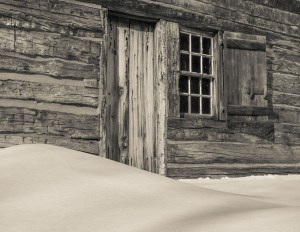
The New Windsor Cantonment has been one of my favorite places to photograph, but last Monday, Presidents’ Day, was actually the first time I had been there in a while. Of course, there was lots of snow, and this challenged me to look at the place with a new eye.

ed cream tone-0357 sIf you’re not familiar with the New Windsor Cantonment, it’s well worth a visit if you’re traveling through Orange County. It’s also known as “the last encampment,” because it was indeed the last encampment of General George Washington’s Continental Army before the end of the Revolutionary War. Today you can walk the grounds and see the (mostly reconstructed) buildings, and on special days, such as on Presidents’ and Memorial Day Weekends, reenactors offer demonstrations of military and camp life. Also on the site is the Purple Heart Hall of Honor. For further information on this historic site (including opening times), visit the website for NY State Parks.

ed-0364 s

Mountaintop Artists Liman and Trautman Shine in Ridgewood

That area of the Northern Catskills known as the Mountaintop is home to heartbreakingly beautiful scenery, gorgeous summer days, inhospitable winters–and an amazingly active colony of artists and crafters. I’ve written about photographer Francis Driscoll in these pages (and will be doing so again) as well as crafter and antiques dealer Cindy Smith. Now, as a lover of the Mountaintop I’m pleased and proud to report on a wonderful exhibit by Mountaintop artists Peter Liman and Sheila Trautman in Ridgewood, New Jersey.

Sheila Trautman poses near her work.

Sheila Trautman poses near her work.

The exhibit is called Oil and Water Do Mix, and Peter (an oil painter) and Sheila (a watercolorist) demonstrate successfully the truth of that statement. Despite their using two different media for their paintings, their work does blend well. I wonder whether it has to do with the sense of place they bring to their work and, with that, their obvious love for the places they paint. Reading the captions to each painting was almost as much of a delight as seeing the paintings themselves. Of course, a number of the paintings depict scenes in the Mountaintop region,

Peter Liman with one of his paintings

Peter Liman with one of his paintings

and I felt privileged to recognize those; perhaps not many in this New Jersey venue could say that.  Bergen County has its own lively arts scene, and, although these two gifted artists are no strangers to the area (Peter is now resident there),  it’s nice to think of the people in northern New Jersey who are seeing Peter and Sheila’s work for the first time.

Oil and Water Do Mix is at The Stable Gallery, 259 North Maple Avenue, Ridgewood, NJ, easily reached off Route 17. The gallery is open Monday to Friday, 9 am to 4 pm, and the exhibit runs until January 31, If you can make it, do get to see it; it’s more than worth it.

Guests at the reception enjoying the art

Guests at the reception enjoying the art

Don’t Miss Mike Bennett’s Radio Memories

Mike Bennett bookDon’t Pay the Ransom, I’ve Escaped. Beginning right with the title you know this isn’t going to be a “serious” book — which is to say that the author, WHUD radio personality Mike Bennett, has the gift of not taking himself too seriously. This is a valuable asset when you live your life as a highly exposed local celebrity, and Mike has a hilarious take on what it’s like to be recognized when you’re trying to enjoy a meal in a local restaurant.

For those of you who don’t know, Mike Bennett is the co-host, with Kacey Morabito, of Mike and Kacey in the Morning on the Hudson Valley radio station WHUD. This award-winning duo is about to celebrate 14 years together playing “one great song after another,” presenting the news, traffic, and weather, and running contests with prizes ranging from New York State lottery tickets to vacations in the Bahamas.

As the book’s subtitle explains, Mike’s book recounts his Memories of a Life on the Radio. But that’s not all. It includes his brief but brilliant stint as a freshman at Orange County Community College — from which it ought to have emerged right then and there that Mike had the gift of gab–, his lightning career (that’s how fast it went) as a real estate salesperson, and, told with his delightfully self-deprecating humor, his brush with formal training as a broadcasting professional.

Someone like Mike Bennett doesn’t emerge suddenly and unexpectedly like Venus springing fully formed from the head of Zeus, and so we also learn about the important things that went on at his alma mater, Monroe-Woodbury High School. Here the lens widens to give us a broader context of life in the Hudson Valley as Mike recounts how the students would sprint across Route 32 to a cow pasture in which there stood a large tree — large enough for the students to hide behind and smoke without being caught by the school authorities. Where that cow pasture and that tree once is now Woodbury Common Premium Outlets, one of the world’s largest shopping centers, the presence of which makes for (in Mike’s words) some “truly awful traffic jams.” I dare say I speak not only for myself when I say I fervently wish it had remained a cow pasture.

We also get several insights into what goes on behind the scenes during the WHUD morning show, including the grueling task (!) of interviewing famous celebrities.

My personal favorite is about the brief exchanges with the contest winners. Here I learned that they actually tape and edit the segment while the music is playing — we’re not hearing it live. Good to know. I always wondered how they avoided some infiltrator yelling out “WXYZ!” to Mike’s closing question, “What station makes you a winner?”

You can’t claim to be the Voice of the Hudson Valley without putting in your fair share of community service. Mike and Kacey each make valuable contributions here,

Here I am with Mike and Jim at Fran's Hallmark in Monroe.

Here I am with Mike and Jim at Fran’s Hallmark in Monroe.

both on and off the air. Outstanding is their annual stint broadcasting from the Maria Fareri Children’s Hospital as a fundraiser for this incredibly competent and compassionate facility. Mike also partners with meteorologist Jim Witt, whose  long-range weather calendars are sold to raise money for the Hope for Youth Foundation. In the closing weeks of the year Jim appears at various venues to personally sign and sell the calendars, and I recently caught up with Jim and Mike together, signing their calendar and book respectively, at Fran’s Hallmark in Monroe. By the way, it’s not too late to buy this lovely calendar — you get not only Jim’s long-range weather forecasts but also a year’s worth of great Hudson Valley photos.

Closing question: Kacey, when are you going to write your radio memoirs?